Post-Execution Evaluation of Strategic Plans – IAF Interview

formagatepurpose

IA-Forum: What is your approach to Monitoring and Evaluation strategic plans?

Magate Wildhorse and I thank the Association for Strategic Planning, and the International Affairs Forum (IAF) for the opportunity to speak on the topic of Evaluating Strategic Plans, Post-Execution  ahead of the ASP Conference 2018. This year’s conference theme: “Bridging the Strategy Execution Gap”.

Below Meegan Scott shares with Dimitri Neos of the International Affairs Forum on the Magate Wildhorse approach to evaluating strategic plans post execution. The pre-conference interview addresses post implementation strategic plan evaluation, a best practice for driving strategy execution success.

Our approach to pre-implementation evaluation of strategic plans was shared in the previous post. In the second post of the series we addressed monitoring the implementation of strategic plans.

IA-Forum:  What about the post-execution evaluation process?

Meegan Scott:  The task at hand in post-implementation is to make a judgement about the strength of the organization at a milestone review period (when we’re asked to do evaluation).

It could be a Mid-term Review of a Plan or at the end of a Plan Period.

We ask if the organization is stronger at the end of that milestone period or the planned period than when the plan was created, and at the start of execution.  Was the strategy executed successfully?  This is an attempt to assess the effectiveness of a plan in guiding the organization towards achieving improved performance.  We look at that in terms of effectiveness, efficiency, relevance, financial viability, cost effectiveness, and for some type entities, we would go deeper into looking at quality aspects. 

For that type of plan, let’s say for a manufacturer of clothing, we may use the Hoshin Planning Model to add those related lines of questions to the evaluation.  In general, we also look at how the plan helps the organization with adjusting to changes in the environment.  These include political factors, social factors, competitor inflation, interest rates, legislation and even ecological factors.  Sometimes, we’ll find that entities do not know all the governing legislation affecting them.  So, we normally place a table up at the front of a plan that includes governing legislations.

We also look at the plan logic and the premises and predictions.  How did those work according to plan?  Were they accurate, to what extent, and what needs to be adjusted?  We look at whether or not the plan helped to improve motivation in a desired culture and advance the mission of the organization.  We also look at its impact on the organization, on its history.

Did it help to create new history?  Did the plan carry out what was meant to be done?  Did it help to strengthen and improve financial management partnerships, program management, leadership at different levels, and HR capacity to support both the present and the desired future?  Analyzing HR capacity is in part to help management retain tacit knowledge in the organization rather than just staying put and waiting to hire staff.

Typically, the evaluation will take the form of a self-assessment.  Even though it may be a request for an evaluation by a donor, we try to make it into a self-assessment so that the client can benefit from owning and growing that culture of performance and measurement and improvement.

The client also benefits from receiving information for decision-making related to their strategic choices for strategy updates and reformulation for the next plan and milestone period. That adds much more benefit than if you did the evaluation with merely accountability in mind.  We therefore approach the evaluation with a view to gathering performance information, meeting accountability requirements, and to guide resource allocation.  Another important thing we look at is the infrastructure for delivering strategy.

If the organization is implementing multi programs as would be in the case of a government department, and many NGOs, the approach would be heavily influenced by the terms of reference.  That comes with a call for proposal versus if it was just the organization that came up with the idea and asked for a proposal.  In the latter case we are left with greater leverage in designing what it is that we will be doing.

Our approach includes a blend of evaluation approaches.  This depends on the competence of the organization in collecting and using performance information and the information needs outlined or that we glean from the call for the evaluation and the intended users.  That blend would involve components of the utilization focus Evaluation approach.

It would include consultations for ensuring that the information collected will be of benefit and is what is desired by the organization and its stakeholders.  We may even use a theory-based evaluation approach for assessing the logic for addressing a particular problem, the effectiveness, and the context.

We would want to look at the theory of change, how it’s holding up against what was expected, the participants and their attitude, and how their participation impacts the outcomes for them.  We could also use a more all-inclusive strategic evaluation approach.  That would be a strategic evaluation into the outcomes and the impact of the target population.

Irrespective of the evaluation approach or blend thereof, we would consider planned results against actual results and unintended results.

So, going back to the strategic evaluation— we’d look at the results and service levels as well whatever they are creating, selling or giving away.  For outcomes, our examination would be in terms of their relevance and effectiveness.  For outputs, the focus would be the products or services and how efficient the organization was in producing them (the outputs). Other output related questions to answer would be— along the lines of how cost-effective it was to deliver the solutions, and the quality of those outputs that were delivered.

You also want to analyze the internal management and leadership as it relates to output processes that are involved and for developing them.

So you perform an individual level assessment and review of measures.  This can be an area of challenge or resistance.  The moment you begin to ask for job descriptions and such, expect a break or stop in information flow.  At the plan level, we review measures indicators, strategy identity, et cetera.

A key component of the exercise is the management response session that we’ll lead for discussing the findings, the recommendations, and the judgment.  From that, you’ll get feedback into how management feel about the judgment and the findings.  This may result in some insight about the context and maybe some adjustment.  You will also draw out of that process actions for improvement and try to get some calendar and resource commitments towards that.

A review of external literature and internal organizational documents is part of the process.  External literature includes literature of the external environment.  When looking at internal literature, we examine their reporting and administrative documents, the operations plan, the corporate strategy plan, performance reports, and minutes from board meetings.  Other methods or lines of evidence for data analysis could include conducting surveys, interviews, and consultations.  If some instances we must calculate, develop estimates, or undertake social media searches. At times we even have to look at or conduct lab research or participatory.

The output would be typically an organizational assessment and development report.  This would include the proposed strategic options and choices for informing the development of a new strategy plan, strategy update, or a plan for the next plan period.

Let’s turn to the kinds of questions that we would ask. Different evaluations may have their own unique questions.  But in general, we’d ask questions such as, what were the goals and objectives in the plan?  How did the organization perform based on the strategic intent stated in the plan and its related goals?  We’d also ask how effective did the organization use the plan to manage the delivery of its results?  That is, the priority, the focus areas, the approaches, and accountability.  Another question is: how easily or difficult did the plan make the performance management and measurement process?  Because if it is just a summary of a plan and not fully elaborated and support by measurable indicators, there’s going to be trouble at the execution stage.

An important question to ask is: does the plan include an alignment mechanism for cascading and aligning?  We also look at whether or not the major initiatives and commitments were delivered on time and in budget.  If there were deviations, how wide was the spread and what needs to be changed.  Therefore, if they finished before schedule, were late or on time, we want to understand the reasons.  We also look at the overall workings of the plan logic based on the theory or theories of change or the strategy maps and strategy framework or income output map, or any combination of them.  We also look at whether or not the scope of operations is made clear by the plan.  How suitable was the initiatives or initiatives for building capacity and advancing the strategic direction articulated in the plan— is another area which we examine.

So, to arrive at a judgment we’ll use multiple sources of qualitative and quantitative evidence.  We look at the use of the plan and the process and the annual and periodic review and strategy update.  Are they following that guide and are they updating the plan?  We ask if a priority trade off happened and, if so, why?  We also look at the effectiveness of the plan in communicating to the board, to management, to partners, to funders, and staff.  Do they understand the plan or do they find it to be a burdensome document?  Does it address the value chain and how they’re going to make product relationships and leverage them in terms of the products or services or the supply chain? 

Moreover, we analyze how effective the plan is in articulating the strategic identity.  So that’s how we do that post-implementation evaluation.

See also:

Interview Transcript on IAF

Strategy Execution Challenges

Pre-implementation evaluation of the corporate strategy plan

Monitoring of the corporate strategy plan

—————–

ASPConf2018, the Association for Strategic  Planning Conference, an event for your professional development and business calendars.

Copyright © 2018 International Affairs Forum, Association for Strategic Planning, Magate Wildhorse, Meegan Scott
All Rights Reserved


iaf_logo_blackmagatelogogreen


Eavesdrop on E and O’Neil

Magate Wildhorse Soundcloud channel, audio stories for businessGo undercover for learnings in strategy execution and performance management on Magate Wildhorse Soundcloud Channel this May.

Eavesdrop on O’Neil at the office after dark and later on his date with E. Find out how they’ll tackle the problem of understanding the strategy and deciding on the extent to which the organization had made progress in realizing its desired Advantage since the last strategic plan.

Don’t miss-out on the intimate journey of the forty-something year old executive in his effort to deliver the ambitions of his company.

We believe, taking the position of the fly on the wall won’t hurt if learning how your organization could benefit from a self-assessment; and what to include in your request for a similar solution is what you’ll gain from eavesdropping on E and O’Neil.

It’s Caribbean flavoured with just enough spice for global appetites.

Follow us on Soundcloud and be first to listen to their story.

https://soundcloud.com/magatewildhorse

https://soundcloud.com/magatewildhorse


rethink May on Magate Wildhorse

magate wildhorse youtube channel, new learning, interviews, stories entertainment for strategy, performance management, marketing, canada, caribbean, entrepreneurs May 2018, celebrating 6


Coming this May, 2018

New learning videos on Magate Wildhorse YouTube Channel.
fun plus learning, Subscribe today to ensure you miss none of what’s in store for you.
Find out More about the Magate Wildhorse YouTube Channel below.
The Magate Wildhorse ℠ Channel showcase our promotional videos about our upcoming workshops, events, research, and services, stay tuned so you don’t miss out.
We will share some of what we have learnt in the form of educational videos developed by the Magate Learning Institute.
You will find content on topics such as corporate strategy; strategic planning; marketing; social marketing; social media marketing; monitoring; evaluation and organizational assessments. International development, food safety, environment, entrepreneurship, business, trade, export, and retail will also be featured here.
No, we will not re-invent the wheel, so we will share interesting videos created by others that are related to our main themes and interest; that we believe you might find useful.
From time to time we hope to entertain you with a bit of related trivia.
Magate Wildhorse is a Toronto based Strategic Management and International Development Practise.

https://www.youtube.com/channel/UCkt3MD_s2n2_VDJtJoucsrg/featured

#magatewildhorseonyoutube

Sixth Anniversary Message

The Noësis: Double-Blind Peer Review Guidelines

doubleblindreviewnoesis The Noësis professional magazine and journal, double-blind review process, magate wildhorse, strategy and performance magazine

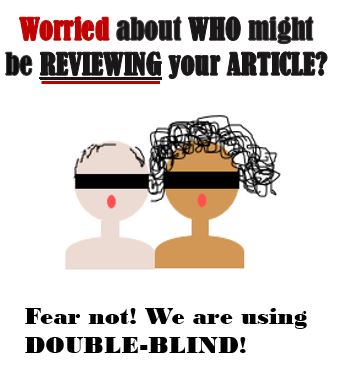
We’ll be using a double-blind review process for articles submitted to The Noësis.

This means the author will not know who reviews his or her work and the reviewer will not know the identity of the author of the piece he or she is assigned to review.

As an author or contributor, we ask that you prepare your submissions in a manner that conceals your identity.  Here’s how, submit your name and the title of your piece in a separate file. You should repeat the title on the file that contains the work intended for publication. Submit both files with one Email and two attachments.

  • If you refer to yourself please use [Anonymous].
  • To cite previous works, you must blind that reference in your reference list. For blinding in the reference list, please use the phrase: ‘[Anonymous 2018] Details have been omitted for double-blind reviewing.’.
  • Besides self-references please include details of other references
  • For figures and illustrations that you have created or adapted please use “[Anonymous] Details have been omitted for the double-blind reviewing.
  • Ensure any author identification such as name, institution, phone number or email address are not contained in the document with the work for review.
  • All submissions must be made in an MS Word document.

Should your submission be accepted you will be provided with the necessary feedback and comments for updating your article or submission. During that process you will replace [Anonymous] or ‘[Anonymous 2018] Details have been omitted for double-blind reviewing.’ with references to you or your affiliate as appropriate.

For questions and comments please click the contact us link.

Warm and Up-Close Remote Strategic Planning

remote strategy planning, remote corporate strategy planning, corporate strategy planner, Toronto, Strategy Planning, virtual planning strategy workshops, strategy facilitator

“Remote strategic planning? Hmmm… I’ve got to say I am doubtful about that one. Strategic planning is too expensive, time consuming and important for me to risk on getting it done virtually”.

If that’s how you feel about remote strategic planning we couldn’t fault you for sharing that sentiment. Strategic planning is serious business and you would be foolhardy to take such an important risk with little information on how remote have worked for planning, or the advantages and drawbacks to it.

Moreover, when you are embarking on the strategic planning journey, both you and your team need a warm interaction with an expert who will do more than facilitate planning. You are likely looking for an expert in strategy as well as a facilitator who serves as an objective advisor. One who ask heads-back and chests-forward incisive questions for helping your team to rethink strategy, goals, objectives and actions. And by doing so ensures what your plan is doable, positions your organization for growth and account for risk. You also want someone to lead your team into reflecting on its history and results to date.

Today, 99% of strategy solution sponsors expect their investment to include an external sounding board, researcher, coach and mentor for helping their team to grow planning skills, experience and knowledge. With such a long wish list hinged on relationships, expertise, experience and time management it is easy to see why to someone unfamiliar with remote strategy planning would perceive it to be too cold and distant to deliver their expectations.

But as William Yeats (The Irish Poet, W.B. Yeats) says— “The world is full of magic things, patiently waiting for our senses to grow sharper.”  Remote strategy planning is one such magic thing waiting to help you grow a stronger organization.

Though odd, this open secret—fear of the unknown and failure is still a hidden factor that have dogged and crippled the leadership of many organizations when it comes to pursuing growth-focused innovation and strategy execution.  Making strategy planning happen when teams are scattered or budget is tight is not excluded from that scenario.

I’d say it’s a sad state of affairs that can be easily fixed. Do not allow fear to limit the impact of your leadership or options for developing and executing your strategy. Explore the exciting opportunities presented by low cost technology for remote planning and other strategic management activities.

Technology have come a long way in providing the virtual platforms that allows individuals and organizations to deliver face-to-face, warm remote interactions. Not to mention, the variety of software and applications that allows for democratic and group processes, stakeholder consultations, interviewing, surveys, data capture from social media and mobile engagement.

All of which provides for deeper learning, expanding knowledge and improving the quality of data on which to make predictions for developing your strategy, plan and related logic.

By now I believe you can see at least a glimmer of how strategic planning could work in a remote environment?

Our ability to gather information on context, clients, customers, suppliers, industry—you name it in addition to internal information for guiding decisions relating to the what and how for advancing your mission and delivering your vision have been enhanced exponentially by remote research capabilities.

On top of that opportunities for your team members to revisit planning sessions individually in their own time for increasing understanding and reflection are tremendous.

Cost is another big factor that have led some organizations to take the “do it yourself”, less objective and less effective though better-than-nothing approach. Others have sadly chosen to skip planning on a flawed assumption that they cannot afford it. International development agencies and large charities have come to see the benefits and cost savings that are available through both remote strategy planning and organizational performance evaluation.

They have come to see the benefits of leveraging technology to connect remote communities and entities with limited resources to top-notch talent.  Talent has come to realize the cost savings and value-added they can deliver through extended capacity to reach customers and stakeholders in faraway places in addition to those nearby.  Big business and organizations in large cities are increasingly turning to the use of remote planning solutions in order to save while including participation by team members in other towns, countries or cities.

You’ll find that UN organizations (United Nations) are among the large NGOs and intergovernmental organizations that are seizing such opportunities. So, what’s holding you back?

If you lack experience that’s not a problem, you must start somewhere.  If you fear it might not be right for you then, you have two options research to find out more then decide, try and see or both.

We understand that remote planning might not be right for every team, so we are willing to help you decide if it is right for yours.

We bring almost two decades of strategy and remote service delivery experience to helping you to decide.

What Goes into The Remote Planning Exercise

When planning with us the steps we’ll take will vary depending on the following: the experience of your team with strategic planning, remote planning, the stage of development of your organization, motivation to and purpose for planning as well as where you are on the strategy process continuum.

As it relates to the strategy process continuum it could be that you are in need of your first corporate strategy plan; or you are at a milestone and need a new strategic operational plan? It is also likely that you have come to the end of the implementation period for a program or a 3-5yr corporate strategy plan and is now in need of a strategy solution for developing the new plan.

In that case you may need an organizational self-assessment for assessing how you did in the past, strategy development, evaluation and planning for creating the new corporate strategy plan that will guide your next strategy execution period. Most organizations, experienced in planning would also invest in the combo of corporate strategy plan, operational plan and performance management tools (For guiding monitoring and evaluation during strategy execution).

Your Solution Unwrapped

Note: The following is not a step-wise process as the steps will depend on where you are on the strategy process continuum.

Depending on what’s right for you we put technology to work with human care and intelligence to take you through processes such as:

  • Eyeball-to-eyeball virtual meetings, conversations and document reviews for understanding your context, wants and needs;
  • Strategic identity creation, clarification or update (For ensuring mission, vision, values etc. are clear, relevant, inspiring and impactful);
  • Identification of your core resources, competence, aspirations, challenges and capabilities;
  • Strategic analysis, drawing on qualitative and quantitative research methods and tools for better understanding your external environment. At the end of which we will better understand how it will or could impact your organization in addition, to how your organization might influence the environment.

We do that by conducting an external environmental scan (PESTLE, STEEP, STEEPLE, SKEPTIC etc.). Having identified trends related to regulation, inflation, ecology, customers, competitors, stakeholders, suppliers among other things we revisit your strategic intent and organizational capacity (Your SWOT plus analysis) to determine the new competencies that will be required in order to get the job done. Technology comes in handy for helping us to engage in rich conversations with your customers, clients and partners live, or to through anonymous sharing— irrespective of distance.

  • Getting to an organizational development plan for you, here again we draw on the technology to present you with a user-friendly document plus face-to-face conversation that enables your leadership and management team to respond to our findings, recommendations and proposed strategy options for delivering your desired competitive edge. This forms part of your planned strategy formulation process.
  • During planning, remote technology enables us to create interactive tools for illustrating and sharing your strategy framework and strategy— articulated into your position, and objectives. From Board to staff will be able to tell what kind of strategy framework you have chosen (Ansoff Matrix, Stakeholder Model, Values Discipline, McKinsey’s Strategic Horizons, Balanced Scorecard or your own blend). Strategy and logic maps can be adjusted in real-time as your team think and re-think your objectives. Best of all they can be made available in a virtual room 24/7s for comments and ideas as they flow to and from your team.
  • Planning remote allows you even more time for bringing leadership and execution teams to a meeting-of-minds as they review scenarios, assess risks and assumptions and decide on trade-offs during the strategy evaluation and strategy elaboration You won’t miss out on live group brainstorm sessions, team building games or pictures of your team working together.

You’ll have plenty of opportunity to share what is working for your team during the planning process and to work out adjustments if necessary.

You may have noticed that we have covered several steps and activities before touching on strategy elaboration—the step or sub-process where the strategy gets translated into plans and workplans (Your plans will include strategic objectives, goals, indicators, quality measures, outcomes and outputs aligned with strategic intent, effort, timelines and resources).

Once the plan has been completed we will help you with the initial stage of communicating your plan. However, if we are engaged to assist with performance management and measurement we support you with full plan communication, additional help with identifying your emergent strategies, analyzing your performance results and triggering strategy update.

Challenges of Remote Planning

In exchange for deeper learning and broader participation your team will need to prep ahead for remote planning. This means using online time converters and e-calendars (outlook, yahoo and or google calendar) for scheduling.

In some instances, you and/or your team may be required to learn new skills for working in virtual planning rooms, accessing web conferences, participating in e-groups or completing online surveys.  Most teams we have met have enjoyed learning those skills. Older Board members might be averse to using some e-tool, depending on their experience with technology. Nonetheless we have been able to include technology challenged individuals in remote planning sessions.

The planning process may be stretched over a longer period of time. Some groups can manage a typical 4-hour virtual planning workshop (Plus lunch and refreshment breaks) while some can only manage two hours.

You may need to check on computers, microphones and plan seating arrangement for you team ahead of the session depending on the set up we agree. It is possible to have a session without you having to consider seating or computers. But we will guide you in setting up your room as the facilitator would have if required.

Love your flipcharts? We will tell you how to make that happen during remote planning.

Expect a session or two where technology might fail and a reschedule maybe required.

Discipline for completing related assignments is required.

You may need to plan and secure refreshment and meals for your team.

Could It Be Worth Your Investment?

We believe that the challenges above are small compared to the benefits of having a plan that includes:

  • a clearly articulated strategic intent,
  • is easy to use for guiding the delivery of the results you planned,
  • makes performance management easy,
  • is doable, affordable and communicates the what and how of your strategy effectively both internally and externally.

When a solution is designed to fit your needs and budget and still allows you to access the expertise and help of a strategy expert, facilitator, strategy analyst, strategy finder, sounding board and performance improvement catalyst, we believe it’s worth the while.

Still on the fence?

Schedule a remote face-to-face connect and clarify session today!

Ccontact us, let's talk remote strategic planning, request remote long-range planning, submit your virtual planning needs, schedule remote corporate strategy planninglick the “let’s talk button” to submit your needs, name of organization, location and three possible meeting times.

Meegan Scott is a strategic management consultant with almost two decades of experience in strategy and remote (virtual) service delivery.


Copyright © 2018 Meegan Scott
All Rights Reserved
 

Remote Planning, Monitoring, Evaluation & Coaching

Need remote organizational strengthening solutions?

  • Remote Strategy Planning
  • Remote Corporate Strategy Planning
  • Remote Strategy Communications
  • Remote Strategic Facilitation
  • Remote Strategic Market and Marketing Research
  • Remote Environmental Scans
  • Remote Project or Program (Programme) Evaluation
  • Remote Organizational Assessment
  • Remote Team Prep for Strategic Planning
  • Remote Program Monitoring
  • Remote Program Director
  • Remote Coaching for Strategy Execution and Change Management

Playing the role of CEO’s helper comes easy for us!

Take  a mini tour of the possibilities— click this link to see how we can keep your back covered.

Ask for your own possibilities—and have your wishes come true.

Get in touch today!

Message us, include your needs and 3 best times to meet during the course of this week.

let's talk, book free consultation, remote project planning, corporate and program planning help, marketing, research, toronto strategy planner, program evaluation, program coordination, contact us

Click contact us to leave your service request.

Thank you for having stopped by and for the invitation to discuss your needs.

Available in Canada and internationally!

Meegan Scott for Magate Wildhorse Ltd.

Business People Can Set Social Change in Motion

Today, I read an interesting article by Richard Straub of the Drucker Society and formally of IBM.

“What does it take to cause something big about a community to change — something that no one individually has much power over, even something as big as a prevailing mindset? We know what it takes: a social movement. And social movements aren’t only the domain of community organizers and college students. Business people can set them in motion, too, as we are seeing right now”.

What Straub said was not new thinking to me, it is a belief that comes as naturally as breathing.

I have seen others with the same belief within and external to the Caribbean Community at home and abroad and I admire them for it.

However, during the past weeks while sharing information related to the Community of Practice for Caribbean Immigrant Entrepreneurs in the OECD and other diaspora markets I was asked questions which made it clear that many in our community still believe that such initiatives are the purview of Government, NGOs or donor agencies.  I also experienced this very sentiment while serving another initiative for change in our community.

It is high time that we realize that business people do have a role in setting such change in motion.

Big business in the community also have a role to play in benefitting from while supporting the growth of smaller businesses. Smaller businesses have a role to play in providing cost effective and relevant solutions that will help bigger businesses with their overall objectives for growth and disruption.

A true entrepreneur recognizes the role of business in providing solutions; and that not all should not be for profit. A business is an individual and like human citizens has a civic role to play in society. We take that role very seriously at Magate Wildhorse Ltd.

I remember years ago serving as marketing manager for an industrial equipment sales and manufacturing entity that suffered regular break-ins at its warehouse located at the border of an inner-city community.

When I suggested to the owner and CEO that we establish a Corporate Social Responsibility programme and engage in dialogue with the community as well as help their students he did not hesitate.  Needless to say, the break-ins ceased— at least for as long as I was there.

I don’t take all the credit for that kind of think for myself; I also thank the Government of Japan and the World Bank for my first scholarship course in Corporate Social Responsibility that served to plant that seed.  I very well had it when it came to volunteering, government, NGOs and donor agencies, but I certainly learnt and have rallied teams to have it entrenched in every entity that I served since 2003.

The Black and Caribbean community must waste no opportunity to seize and run with our freedom and independence as a community— that means coming together to lead the change we want to see.  That means we must engage in strong, persistent actions and create more symbols of the practice of freedom, independence and power of a people and community to chart its destiny.  And in addition to charting its destiny position itself to be a high demand demographic or group within society. I do not propose alienation from other groups in society, I am speaking about moving to fix our big problems in society and positioning for a different future.

I also take this opportunity to challenge all our Alumni Associations to ensure playing a role in advancing the economic outcomes of our graduates is a primary objective your organization. The school ran one leg of the relay, the student and parents did one and our Alumni Associations must wake up and understand this fundamental role of our Alumni and Past Students Associations.

Our community and businesses must wake up, expect and accept the role of businesses and business people to set change in motion.

Meegan Scott                                                                                                              Magate Wildhorse Ltd

Copyright © 2018 Meegan Scott
All Rights Reserved

Shine Your Light Here Entrepreneur!

shine your entrepreneur light, caribbean immigrant entrepreneur supermodel, entrepreneur's CoP, community of practice for entrepreneurs, high performance entrepreneurs

Why join and shine?  Click ‘why join and shine?”.

Join and shine! Click the image above.

To find out more or to report your missing flag click “tell me more” below.

Tell me more!

Who’s At The Helm? I Want Impact!

formagatepurposeAt the helm of Magate Wildhorse Ltd is Meegan Scott.

Expect “strategic thinking, big picture, execution know-how and organizational learning” for every engagement.

She comes with a 20-year success track record helping organizations with improving impact, brand recognition, funding and capability. She makes a difference in strategy formulation, corporate strategy planning through to strategy re-formulation.

A powerful outlier in provoking strategy re-think and pushing teams to shift a singular focus on risk management to risk intelligence.

Her distinguishing strengths— expertise in corporate strategy, marketing and performance management across industries, cultures and geographic spheres.  A solid education plus experience in finance, accounting, project and program management, international relations, international trade, business analysis and ICT, research, quality improvement, and communications skills serve to power up the skills set and competences on your team. Significant studies in business, environmental and trade law powers her capacity help you do the compliance checks.

Strong facilitation, research and group process skills grounded in results-oriented and delivering changes practice allows her to help your team to buy in and commit to your vision and the execution of your strategy.

Get in touch today, we believe top-notch help is for big buck entities as well as for the little ones too.

let's talk, book free consultation, remote project planning, corporate and program planning help, marketing, research, toronto strategy planner, program evaluation, program coordination, contact us

Click the message button above to set a date for that conversation on how we could help your business.