Post-Execution Evaluation of Strategic Plans – IAF Interview

formagatepurpose

IA-Forum: What is your approach to Monitoring and Evaluation strategic plans?

Magate Wildhorse and I thank the Association for Strategic Planning, and the International Affairs Forum (IAF) for the opportunity to speak on the topic of Evaluating Strategic Plans, Post-Execution  ahead of the ASP Conference 2018. This year’s conference theme: “Bridging the Strategy Execution Gap”.

Below Meegan Scott shares with Dimitri Neos of the International Affairs Forum on the Magate Wildhorse approach to evaluating strategic plans post execution. The pre-conference interview addresses post implementation strategic plan evaluation, a best practice for driving strategy execution success.

Our approach to pre-implementation evaluation of strategic plans was shared in the previous post. In the second post of the series we addressed monitoring the implementation of strategic plans.

IA-Forum:  What about the post-execution evaluation process?

Meegan Scott:  The task at hand in post-implementation is to make a judgement about the strength of the organization at a milestone review period (when we’re asked to do evaluation).

It could be a Mid-term Review of a Plan or at the end of a Plan Period.

We ask if the organization is stronger at the end of that milestone period or the planned period than when the plan was created, and at the start of execution.  Was the strategy executed successfully?  This is an attempt to assess the effectiveness of a plan in guiding the organization towards achieving improved performance.  We look at that in terms of effectiveness, efficiency, relevance, financial viability, cost effectiveness, and for some type entities, we would go deeper into looking at quality aspects. 

For that type of plan, let’s say for a manufacturer of clothing, we may use the Hoshin Planning Model to add those related lines of questions to the evaluation.  In general, we also look at how the plan helps the organization with adjusting to changes in the environment.  These include political factors, social factors, competitor inflation, interest rates, legislation and even ecological factors.  Sometimes, we’ll find that entities do not know all the governing legislation affecting them.  So, we normally place a table up at the front of a plan that includes governing legislations.

We also look at the plan logic and the premises and predictions.  How did those work according to plan?  Were they accurate, to what extent, and what needs to be adjusted?  We look at whether or not the plan helped to improve motivation in a desired culture and advance the mission of the organization.  We also look at its impact on the organization, on its history.

Did it help to create new history?  Did the plan carry out what was meant to be done?  Did it help to strengthen and improve financial management partnerships, program management, leadership at different levels, and HR capacity to support both the present and the desired future?  Analyzing HR capacity is in part to help management retain tacit knowledge in the organization rather than just staying put and waiting to hire staff.

Typically, the evaluation will take the form of a self-assessment.  Even though it may be a request for an evaluation by a donor, we try to make it into a self-assessment so that the client can benefit from owning and growing that culture of performance and measurement and improvement.

The client also benefits from receiving information for decision-making related to their strategic choices for strategy updates and reformulation for the next plan and milestone period. That adds much more benefit than if you did the evaluation with merely accountability in mind.  We therefore approach the evaluation with a view to gathering performance information, meeting accountability requirements, and to guide resource allocation.  Another important thing we look at is the infrastructure for delivering strategy.

If the organization is implementing multi programs as would be in the case of a government department, and many NGOs, the approach would be heavily influenced by the terms of reference.  That comes with a call for proposal versus if it was just the organization that came up with the idea and asked for a proposal.  In the latter case we are left with greater leverage in designing what it is that we will be doing.

Our approach includes a blend of evaluation approaches.  This depends on the competence of the organization in collecting and using performance information and the information needs outlined or that we glean from the call for the evaluation and the intended users.  That blend would involve components of the utilization focus Evaluation approach.

It would include consultations for ensuring that the information collected will be of benefit and is what is desired by the organization and its stakeholders.  We may even use a theory-based evaluation approach for assessing the logic for addressing a particular problem, the effectiveness, and the context.

We would want to look at the theory of change, how it’s holding up against what was expected, the participants and their attitude, and how their participation impacts the outcomes for them.  We could also use a more all-inclusive strategic evaluation approach.  That would be a strategic evaluation into the outcomes and the impact of the target population.

Irrespective of the evaluation approach or blend thereof, we would consider planned results against actual results and unintended results.

So, going back to the strategic evaluation— we’d look at the results and service levels as well whatever they are creating, selling or giving away.  For outcomes, our examination would be in terms of their relevance and effectiveness.  For outputs, the focus would be the products or services and how efficient the organization was in producing them (the outputs). Other output related questions to answer would be— along the lines of how cost-effective it was to deliver the solutions, and the quality of those outputs that were delivered.

You also want to analyze the internal management and leadership as it relates to output processes that are involved and for developing them.

So you perform an individual level assessment and review of measures.  This can be an area of challenge or resistance.  The moment you begin to ask for job descriptions and such, expect a break or stop in information flow.  At the plan level, we review measures indicators, strategy identity, et cetera.

A key component of the exercise is the management response session that we’ll lead for discussing the findings, the recommendations, and the judgment.  From that, you’ll get feedback into how management feel about the judgment and the findings.  This may result in some insight about the context and maybe some adjustment.  You will also draw out of that process actions for improvement and try to get some calendar and resource commitments towards that.

A review of external literature and internal organizational documents is part of the process.  External literature includes literature of the external environment.  When looking at internal literature, we examine their reporting and administrative documents, the operations plan, the corporate strategy plan, performance reports, and minutes from board meetings.  Other methods or lines of evidence for data analysis could include conducting surveys, interviews, and consultations.  If some instances we must calculate, develop estimates, or undertake social media searches. At times we even have to look at or conduct lab research or participatory.

The output would be typically an organizational assessment and development report.  This would include the proposed strategic options and choices for informing the development of a new strategy plan, strategy update, or a plan for the next plan period.

Let’s turn to the kinds of questions that we would ask. Different evaluations may have their own unique questions.  But in general, we’d ask questions such as, what were the goals and objectives in the plan?  How did the organization perform based on the strategic intent stated in the plan and its related goals?  We’d also ask how effective did the organization use the plan to manage the delivery of its results?  That is, the priority, the focus areas, the approaches, and accountability.  Another question is: how easily or difficult did the plan make the performance management and measurement process?  Because if it is just a summary of a plan and not fully elaborated and support by measurable indicators, there’s going to be trouble at the execution stage.

An important question to ask is: does the plan include an alignment mechanism for cascading and aligning?  We also look at whether or not the major initiatives and commitments were delivered on time and in budget.  If there were deviations, how wide was the spread and what needs to be changed.  Therefore, if they finished before schedule, were late or on time, we want to understand the reasons.  We also look at the overall workings of the plan logic based on the theory or theories of change or the strategy maps and strategy framework or income output map, or any combination of them.  We also look at whether or not the scope of operations is made clear by the plan.  How suitable was the initiatives or initiatives for building capacity and advancing the strategic direction articulated in the plan— is another area which we examine.

So, to arrive at a judgment we’ll use multiple sources of qualitative and quantitative evidence.  We look at the use of the plan and the process and the annual and periodic review and strategy update.  Are they following that guide and are they updating the plan?  We ask if a priority trade off happened and, if so, why?  We also look at the effectiveness of the plan in communicating to the board, to management, to partners, to funders, and staff.  Do they understand the plan or do they find it to be a burdensome document?  Does it address the value chain and how they’re going to make product relationships and leverage them in terms of the products or services or the supply chain? 

Moreover, we analyze how effective the plan is in articulating the strategic identity.  So that’s how we do that post-implementation evaluation.

See also:

Interview Transcript on IAF

Strategy Execution Challenges

Pre-implementation evaluation of the corporate strategy plan

Monitoring of the corporate strategy plan

—————–

ASPConf2018, the Association for Strategic  Planning Conference, an event for your professional development and business calendars.

Copyright © 2018 International Affairs Forum, Association for Strategic Planning, Magate Wildhorse, Meegan Scott
All Rights Reserved


iaf_logo_blackmagatelogogreen


Warm and Up-Close Remote Strategic Planning

remote strategy planning, remote corporate strategy planning, corporate strategy planner, Toronto, Strategy Planning, virtual planning strategy workshops, strategy facilitator

“Remote strategic planning? Hmmm… I’ve got to say I am doubtful about that one. Strategic planning is too expensive, time consuming and important for me to risk on getting it done virtually”.

If that’s how you feel about remote strategic planning we couldn’t fault you for sharing that sentiment. Strategic planning is serious business and you would be foolhardy to take such an important risk with little information on how remote have worked for planning, or the advantages and drawbacks to it.

Moreover, when you are embarking on the strategic planning journey, both you and your team need a warm interaction with an expert who will do more than facilitate planning. You are likely looking for an expert in strategy as well as a facilitator who serves as an objective advisor. One who ask heads-back and chests-forward incisive questions for helping your team to rethink strategy, goals, objectives and actions. And by doing so ensures what your plan is doable, positions your organization for growth and account for risk. You also want someone to lead your team into reflecting on its history and results to date.

Today, 99% of strategy solution sponsors expect their investment to include an external sounding board, researcher, coach and mentor for helping their team to grow planning skills, experience and knowledge. With such a long wish list hinged on relationships, expertise, experience and time management it is easy to see why to someone unfamiliar with remote strategy planning would perceive it to be too cold and distant to deliver their expectations.

But as William Yeats (The Irish Poet, W.B. Yeats) says— “The world is full of magic things, patiently waiting for our senses to grow sharper.”  Remote strategy planning is one such magic thing waiting to help you grow a stronger organization.

Though odd, this open secret—fear of the unknown and failure is still a hidden factor that have dogged and crippled the leadership of many organizations when it comes to pursuing growth-focused innovation and strategy execution.  Making strategy planning happen when teams are scattered or budget is tight is not excluded from that scenario.

I’d say it’s a sad state of affairs that can be easily fixed. Do not allow fear to limit the impact of your leadership or options for developing and executing your strategy. Explore the exciting opportunities presented by low cost technology for remote planning and other strategic management activities.

Technology have come a long way in providing the virtual platforms that allows individuals and organizations to deliver face-to-face, warm remote interactions. Not to mention, the variety of software and applications that allows for democratic and group processes, stakeholder consultations, interviewing, surveys, data capture from social media and mobile engagement.

All of which provides for deeper learning, expanding knowledge and improving the quality of data on which to make predictions for developing your strategy, plan and related logic.

By now I believe you can see at least a glimmer of how strategic planning could work in a remote environment?

Our ability to gather information on context, clients, customers, suppliers, industry—you name it in addition to internal information for guiding decisions relating to the what and how for advancing your mission and delivering your vision have been enhanced exponentially by remote research capabilities.

On top of that opportunities for your team members to revisit planning sessions individually in their own time for increasing understanding and reflection are tremendous.

Cost is another big factor that have led some organizations to take the “do it yourself”, less objective and less effective though better-than-nothing approach. Others have sadly chosen to skip planning on a flawed assumption that they cannot afford it. International development agencies and large charities have come to see the benefits and cost savings that are available through both remote strategy planning and organizational performance evaluation.

They have come to see the benefits of leveraging technology to connect remote communities and entities with limited resources to top-notch talent.  Talent has come to realize the cost savings and value-added they can deliver through extended capacity to reach customers and stakeholders in faraway places in addition to those nearby.  Big business and organizations in large cities are increasingly turning to the use of remote planning solutions in order to save while including participation by team members in other towns, countries or cities.

You’ll find that UN organizations (United Nations) are among the large NGOs and intergovernmental organizations that are seizing such opportunities. So, what’s holding you back?

If you lack experience that’s not a problem, you must start somewhere.  If you fear it might not be right for you then, you have two options research to find out more then decide, try and see or both.

We understand that remote planning might not be right for every team, so we are willing to help you decide if it is right for yours.

We bring almost two decades of strategy and remote service delivery experience to helping you to decide.

What Goes into The Remote Planning Exercise

When planning with us the steps we’ll take will vary depending on the following: the experience of your team with strategic planning, remote planning, the stage of development of your organization, motivation to and purpose for planning as well as where you are on the strategy process continuum.

As it relates to the strategy process continuum it could be that you are in need of your first corporate strategy plan; or you are at a milestone and need a new strategic operational plan? It is also likely that you have come to the end of the implementation period for a program or a 3-5yr corporate strategy plan and is now in need of a strategy solution for developing the new plan.

In that case you may need an organizational self-assessment for assessing how you did in the past, strategy development, evaluation and planning for creating the new corporate strategy plan that will guide your next strategy execution period. Most organizations, experienced in planning would also invest in the combo of corporate strategy plan, operational plan and performance management tools (For guiding monitoring and evaluation during strategy execution).

Your Solution Unwrapped

Note: The following is not a step-wise process as the steps will depend on where you are on the strategy process continuum.

Depending on what’s right for you we put technology to work with human care and intelligence to take you through processes such as:

  • Eyeball-to-eyeball virtual meetings, conversations and document reviews for understanding your context, wants and needs;
  • Strategic identity creation, clarification or update (For ensuring mission, vision, values etc. are clear, relevant, inspiring and impactful);
  • Identification of your core resources, competence, aspirations, challenges and capabilities;
  • Strategic analysis, drawing on qualitative and quantitative research methods and tools for better understanding your external environment. At the end of which we will better understand how it will or could impact your organization in addition, to how your organization might influence the environment.

We do that by conducting an external environmental scan (PESTLE, STEEP, STEEPLE, SKEPTIC etc.). Having identified trends related to regulation, inflation, ecology, customers, competitors, stakeholders, suppliers among other things we revisit your strategic intent and organizational capacity (Your SWOT plus analysis) to determine the new competencies that will be required in order to get the job done. Technology comes in handy for helping us to engage in rich conversations with your customers, clients and partners live, or to through anonymous sharing— irrespective of distance.

  • Getting to an organizational development plan for you, here again we draw on the technology to present you with a user-friendly document plus face-to-face conversation that enables your leadership and management team to respond to our findings, recommendations and proposed strategy options for delivering your desired competitive edge. This forms part of your planned strategy formulation process.
  • During planning, remote technology enables us to create interactive tools for illustrating and sharing your strategy framework and strategy— articulated into your position, and objectives. From Board to staff will be able to tell what kind of strategy framework you have chosen (Ansoff Matrix, Stakeholder Model, Values Discipline, McKinsey’s Strategic Horizons, Balanced Scorecard or your own blend). Strategy and logic maps can be adjusted in real-time as your team think and re-think your objectives. Best of all they can be made available in a virtual room 24/7s for comments and ideas as they flow to and from your team.
  • Planning remote allows you even more time for bringing leadership and execution teams to a meeting-of-minds as they review scenarios, assess risks and assumptions and decide on trade-offs during the strategy evaluation and strategy elaboration You won’t miss out on live group brainstorm sessions, team building games or pictures of your team working together.

You’ll have plenty of opportunity to share what is working for your team during the planning process and to work out adjustments if necessary.

You may have noticed that we have covered several steps and activities before touching on strategy elaboration—the step or sub-process where the strategy gets translated into plans and workplans (Your plans will include strategic objectives, goals, indicators, quality measures, outcomes and outputs aligned with strategic intent, effort, timelines and resources).

Once the plan has been completed we will help you with the initial stage of communicating your plan. However, if we are engaged to assist with performance management and measurement we support you with full plan communication, additional help with identifying your emergent strategies, analyzing your performance results and triggering strategy update.

Challenges of Remote Planning

In exchange for deeper learning and broader participation your team will need to prep ahead for remote planning. This means using online time converters and e-calendars (outlook, yahoo and or google calendar) for scheduling.

In some instances, you and/or your team may be required to learn new skills for working in virtual planning rooms, accessing web conferences, participating in e-groups or completing online surveys.  Most teams we have met have enjoyed learning those skills. Older Board members might be averse to using some e-tool, depending on their experience with technology. Nonetheless we have been able to include technology challenged individuals in remote planning sessions.

The planning process may be stretched over a longer period of time. Some groups can manage a typical 4-hour virtual planning workshop (Plus lunch and refreshment breaks) while some can only manage two hours.

You may need to check on computers, microphones and plan seating arrangement for you team ahead of the session depending on the set up we agree. It is possible to have a session without you having to consider seating or computers. But we will guide you in setting up your room as the facilitator would have if required.

Love your flipcharts? We will tell you how to make that happen during remote planning.

Expect a session or two where technology might fail and a reschedule maybe required.

Discipline for completing related assignments is required.

You may need to plan and secure refreshment and meals for your team.

Could It Be Worth Your Investment?

We believe that the challenges above are small compared to the benefits of having a plan that includes:

  • a clearly articulated strategic intent,
  • is easy to use for guiding the delivery of the results you planned,
  • makes performance management easy,
  • is doable, affordable and communicates the what and how of your strategy effectively both internally and externally.

When a solution is designed to fit your needs and budget and still allows you to access the expertise and help of a strategy expert, facilitator, strategy analyst, strategy finder, sounding board and performance improvement catalyst, we believe it’s worth the while.

Still on the fence?

Schedule a remote face-to-face connect and clarify session today!

Ccontact us, let's talk remote strategic planning, request remote long-range planning, submit your virtual planning needs, schedule remote corporate strategy planninglick the “let’s talk button” to submit your needs, name of organization, location and three possible meeting times.

Meegan Scott is a strategic management consultant with almost two decades of experience in strategy and remote (virtual) service delivery.


Copyright © 2018 Meegan Scott
All Rights Reserved


Call for Reviewers & Editors — Magazine/Journal

The Noësis: MWildhorse Strategy and Performance Magazine (two issues per year) is committed to publishing non-technical as well as technical information in the fields of Business and International Development. With a focus on strategy, marketing, trade, performance management and measurement, intellectual property and the creative industries—the publication aims to provide a complete and reliable source of information, how-to and in field applications on the aforementioned topics.  It will facilitate the growth of grey literature in strategy, marketing and performance management unique to Caribbean-Canadian and Caribbean organizations. By Caribbean we refer to the Caribbean and its diaspora markets.  We are devoted to publishing high quality articles and stories that are easily accessible and sold at an inclusive price.

springcover2018sampleThe magazine will also feature Canadian business stories and approaches.

Canadian researchers, practitioners and graduates are provided with an opportunity to publish whether or not their pieces contain a Caribbean focus.

The Noësis publishes articles, case studies, anecdotes, jokes, cartoons, interviews, literature reviews, stories, opinions, commentaries, news stories, and research works that are original and of high standards.

Join Us as a Reviewer/an Editorial Member

Magate Wildhorse Ltd and Meegan Scott are the independent publishers of The Noësis. We are committed to ensuring peer-reviewed, edited and proof-read content is shared with our readership.

As a new publisher, we have opened the call for reviewers and editors.

Reviewers and editor/reviewers sought will review scholarly or academic like pieces or pieces intended for the general public, as such different skills and experience sets are required.

A reviewer (Academic or scholarly pieces) is expected to exercise his/her expertise and knowledge to critically analyze the content of submissions as well as drafts and proposed pieces. Contributors and the magazine look forward to impartial, fair and constructive suggestions which can help improve the quality of the publication. A reviewer must be an expert in his/her field, should have in depth knowledge of his field and should have been actively involved in reviewing submissions for other journals or magazine or have experience in reviewing academic papers. Successful and dedicated reviewers will be invited to join our editorial board. Reviewers should hold a PhD or DBA in the area or field for which a piece is being reviewed.

Editor/reviewers for pieces aimed at the general public may be industry experts, generalists and/or journalists with experience in reviewing submissions for business magazines and newspapers. Editors/reviewers are expected to exercise their expertise in reviewing and editing submissions for content, accuracy, clarity, style, voice, language and Consistency.  For Caribbean rooted pieces a knowledge of phrases, sayings, folklore and creole from the different countries would be an asset. You are also expected to provide feedback for helping the editor with design layout, editing and proof-reading (spelling, grammar, punctuation, insertions an amendment, labels and attribution). Editor/Reviewers should hold a PhD, DBA, MBA, MSc., LLM or Communications or Journalism Degree as appropriate to their role or the topic(s) they will edit or review.

A double-blind peer review process will be used.

Editorial Board members are responsible for helping with peer reviewing and editing of the content submitted for the publication. Soliciting papers for the magazine, recommending suitable reviewers, and advising on the development of the magazine are among the duties of editorial board members. Promoting the publication at conferences, events, institutions, special and academic libraries as well as providing feedback, views and comments for improving the magazine are key responsibilities of editorial board members. Editorial Board members should hold a PhD, DBA, MBA, MSc., LLM or Communications or Journalisms Degree as appropriate to their role or the topic(s) they will edit or review.

Board members must also be experienced in reviewing business magazines, newspapers, professional, academic or trade journals.

All applicants must possess strong business and academic competence in English.

Reviewers, editor/reviewers and editorial board members will all be listed in The Noësis and on the publications’ web site at: https: www.theNoësis.com (Soon to be launched).

Editors and reviewers will receive three (3) complimentary copies of the publication as well as free online subscription.

Submit Your Application

To apply please submit a copy of your CV, your full name, email and skype contact along with a brief note indicating your interest in and the strengths you bring to the publication.  Thanks also for including the country in which you are located, required turnaround time for review and editing of pieces nd your experience serving in a related role.

Application deadline: March 7, 2018  (Now extended and ongoing).

Submit your application to: magatewildhorse@gmail.com

All available roles are volunteer positions.

Note: Please indicate your interest in the subject line of your Email by including one or two of the following:

Join Reviewer Team” or “Join Editorial Board” or “Join Editor-in-chief or Join Editor/Reviewer General

Thank you in advance for your interest.

Magate Wildhorse Ltd.

————–

The Noësis: MWildhorse Strategy and Performance Magazine — Call for Papers

Deadline: April 15, 2018

The Noesis text logo


Call for Papers —The Noësis: MWildhorse Strategy and Performance Magazine

Deadline: April 15, 2018

springcover2018sampleIn a world where the language of business expands almost daily and growth-related concepts can be tough to understand The Noësis aims to bring understanding and simplicity —disambiguation.

Its content will facilitate understanding of tough business and development concepts while accelerating the learning of industry language and how-to; and will help organizations and entrepreneurs get more out of their investment in consulting solutions. Practitioners and consultants can expect content that will help them to improve their craft.

It does this by highlighting successful Caribbean and Canadian entrepreneurs, research findings, issues, trends, companies, stories, commentaries, book reviews and entertainment pieces.  Articles and stories focus on growth related topics such as strategy, marketing, trade, performance management and measurement, intellectual property and the creative industries.

The publication is a hybrid Magazine/Professional Journal geared towards C-level executives, entrepreneurs, researchers, practitioners and consultants with an interest in strategy, marketing, evaluation, organizational assessments, international trade, entrepreneurship and international development. And will be circulated to senior executives, business owners and libraries.

The new Canadian-Caribbean Magazine is the only business magazine designed to promote the culture of Caribbean entrepreneurship and entrepreneurship as a desirable, feasible and viable economic activity for Caribbean immigrants in Canada and other diasporic markets of the Caribbean.

We want to see the growth of high performing Caribbean businesses in all major Diaspora markets. We want to see the Caribbean culture of entrepreneurship and its entrepreneurial DNA deliver significant impact to entrepreneurs and the markets in which the businesses call home— as well as those they serve.

Hence, we provide information, stimulate debate, share research, cases and stories for ensuring organizational leaders and team have the necessary information for strategy success in starting and growing their businesses.  We want to see greater impact from international development initiatives especially in ACP Countries; therefore, we will address those issues and explore solutions.

Publishing Opportunities

Consultants and practitioners are invited to submit articles, case studies, anecdotes and stories.

Academic researchers, consultants, and experts are invited to serve in editorial roles as well as to contribute articles, stories and cases.

Recent Graduates, final year PhD and Master’s Degree students are invited to submit articles based on their final research papers. Submissions should have a focus on the Caribbean, Caribbean Diaspora Markets or Canada.

Business writers and/journalists are invited to submit articles (feature, news stories, historical and opinion pieces, commentaries and tips).

Editorial Policy and Practice

Academic submissions will be peer-reviewed. Other pieces will be reviewed by subject matter experts, academia or magazine editors. However, all published pieces would have met the editorial standards and the objectives of the magazine.

Contributor Guidelines

What to Include in Your Draft or Proposal

Submissions must be in MS Word documents. Illustrations and images should be clear and impactful in communicating your ideas. They may include maps, photos, illustration, tables, infographics and other images that are properly labelled.

Double-blind Peer Review

Please click the link above to ensure your submissions are compliant with the double-blind peer review process applicable to all submissions.

Deadline for final submissions: May 30, 2018
Deadline for submission of drafts or proposals: April 15, 2018.

To submit your proposal, article or query, please contact Meegan Scott by Email at: magatewildhorse@gmail.com

The Noesis text logo

The Noësis: MWildhorse Strategy and Performance Magazine

In 2016, we decided to take our client learning digest to you in the form of a hybrid Magazine/Professional Journal— The Noësis: MWildhorse Strategy and Performance Magazine.

Some of you are familiar with The Noësis, the brainchild of Meegan Scott. A publication first released in 2013 as a learning aide for ensuring our clients fully understand, appreciate and leverage their consulting solutions.

springcover2018sampleIn 2018, we present to you a magazine with the same themes and two additional objectives.  The publication maintains its purpose to simplify and facilitate understanding of tough business and development concepts while accelerating the learning of industry language and how-to.

It does this through its content—showcasing of successful Caribbean and Canadian entrepreneurs, research findings, issues, trends, companies, stories, commentaries, book reviews and entertainment pieces.  Articles and stories focus on growth related topics such as strategy, marketing, trade, performance management and measurement, intellectual property and the creative industries.

The new Magazine is the only business magazine designed to promote the culture of Caribbean entrepreneurship and entrepreneurship as a desirable, feasible and viable economic activity for Caribbean immigrants in Canada and other diasporic markets of the Caribbean.

Providing a forum for awakening desire, driving aspiration and moving significantly more Caribbean immigrants to answer the call of entrepreneurship— is a new objective for the publication.  We want to see the growth of high performing Caribbean businesses in all major Diaspora markets. We want to see the Caribbean culture of entrepreneurship and its entrepreneurial DNA deliver significant impact to entrepreneurs and the markets in which the businesses call home— as well as those they serve.

Hence, we will provide information, stimulate debate, share research and stories for ensuring you have the necessary information for strategy success in starting and growing your businesses.  We want to see greater impact from international development initiatives especially in ACP Countries; therefore, we will address those issues and explore solutions.

Towards that end we are providing a forum through which emerging and seasoned researchers, consultants and practitioners in Canada, ACP Countries, the Caribbean and its Diaspora can share the findings of their research, connect with entrepreneurs and issues facing organizational leaders and their teams both within and external to the Caribbean community. That commitment unveiled the second of your new objectives.

What motivated me to upgrade and expand “The Noësis: MWildhorse Strategy and Learning Digest” to the current The Noësis: MWildhorse Strategy and Performance Magazine?

Learnings from our consulting engagements, discussions with entrepreneurs, lived experience as a Caribbean-Canadian entrepreneur and research into our performance as entrepreneurs in Canada and other Diaspora markets.

I take this opportunity to invite you to submit original research notes, opinions, technical reports, articles, anecdotes,cartoons, and stories (Both of triumph and failures).

The Magazine is sponsored by Magate Wildhorse Ltd., but will allow for limited advertising by one or two brands per issue.

The success of this publication and its objective depends on your response and actions.  We are committed to updating The Noësis based on your needs and feedback.

Thank you for your feedback and subscriptions.

Click here to subscribe, ask a question or comment.

— Meegan Scott

What You Need When Execution is the Challenge!

Gallery

This gallery contains 1 photo.

Pepper Pot Strategy and Execution Solutions                                       Comes in … 60 min  90 min 120 min 1/2 day sessions  or     … Continue reading →

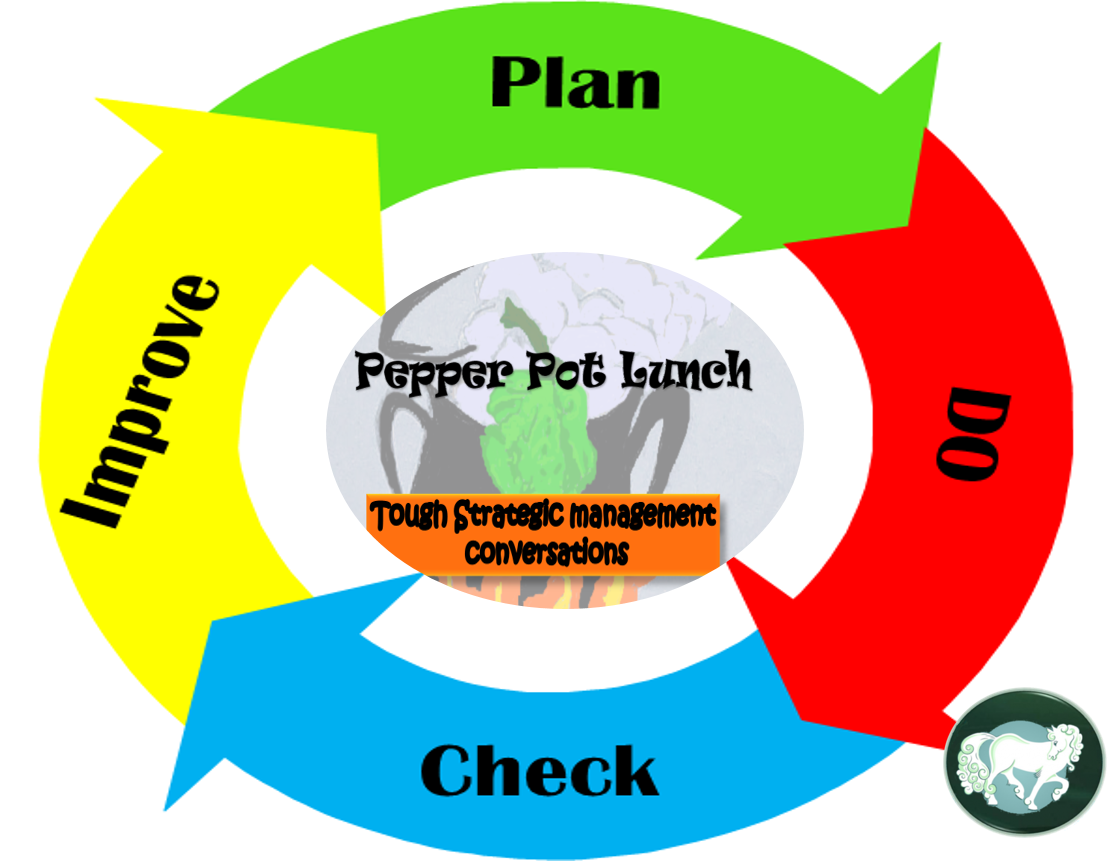
Pepper Pot Lunch ℠ — Your Culture of Performance Improvement Helper

Click the image to find out more.
Available in 60-minutes, 90-minutes, 3 hours and half-a-day sessions.

Improvement and impact on PepperPot

Environmental Scanning Solutions – PESTEL Analysis & SKEPTIC Scans +

Environmental Scanning solutionEnvironmental scanning solutions for risk intelligence and risk management needs. We will conduct environmental scans and present the findings for your strategic marketing, corporate strategy planning, policy development, project planning or organizational assessment need. We make it easy for management to see how the external environment does and could impact a market, policy, program, strategy, project or the organization in the future. Get your eyes on emerging trends, strengthen your forecasting, get a better understanding of factors, issues, variables and causal relationships. skeptic scanAsk for a PESTEL or PESTLE Analysis, SWOT, SKEPTIC Scan, PEST, STEEP, SLEPT, STEEPLE, PESTER or model of your choice. Let us help you test those assumptions and make decisions with insights from rigorous analysis.

Request your solution today!

Phone: 647-854-5323 or click here to leave us a message.


Burning Desire: A Culture of Performance Improvement

Is performance improvement your burning desire?
Is a culture of performance improvement on your wish list for your organization, team, program or project?

Then Pepper Pot Lunch ℠ is for you.
Pepper Pot Lunch ℠ is hot!  That is why it is not for every team or organization.
Pepper Pot Lunch ℠   is tailor made to suit the strategic conversation, root cause analysis and problem solving needs of organizations and their champions of change.

Each participatory session is geared towards tackling a challenge related to:
1. Understanding strategy
2. Winning commitment to strategy
3. Taking action for getting the results you, the organization, customers and stakeholders want
4. Growing a culture of performance and improvement

Because you know a great solution when you see it, you’ll be among the first 100 to order your
Pepper Pot Lunch ℠   solution for your team or organization.

Pepper Pot Lunch ℠   are not just “talk shops”, they are interactive, fact finding, information sharing and active problem solving sessions.

We guarantee rich entertaining sessions which engages heads, hearts and hands for getting you on the path to success.

Try Pepper Pot Lunch ℠   today.

Facilitated strategic management conversations—that drive commitment, strategy alignment and help your organization to grow a culture of performance and improvement.

Lunch date with your team and you?
We’ll take Pepper Pot Lunch, plus we’ll also take the fire for you when it comes to those tough strategic management conversations.

Pepper Pot Lunch ℠ Sessions are held for 60 to 120 min. [The time is dependent on the issue and type of session].

Message us to discuss your Pepper Pot Lunch need and order today!
Or phone us at: 1(647) 854-5323

#performanceimprovement #strategicconversations #problemsolvingsessions #value #quality #lunchsessions #problemsolving #pepperpotlunch #PepperPotAct #changemanagement #strategicfacilitation #strategicfacilitator

Try This Love On Your Business

try the love

8 eight!

Try this love on your business today! Flexible, hold-your-hand, systems thinking, results-based, evidence-based, participatory, LEAN, value based pricing, tailored to fit–Impact by design solutions. Ain’t that 8 or more reasons for wanting this love for your business?

Loving your biz in more ways than1!
Magate Wildhorse
Message us today!

Celebrating 5! Never Miss a Beat!

An awful lot of brain talking going on.
Join the conversation.

https://goo.gl/omROqa
#love4urbiz #8love4urbiz