
Environmental Scanning: Building an Evidence-Informed Foundation for Strategic Planning

Magate Wildhorse logo, horse on green stone. Binoculars, decision tree, map, compass, books labelled trends, opportunities, risks, insight, tree and skies reflecting world map and sunshine, buildings in the distance.

Strategic planning requires organizations to make choices about the future. But those choices cannot be made effectively by looking inward alone.

Organizations operate within environments shaped by changing government policies, economic conditions, demographic shifts, technological developments, social expectations, funding arrangements, competitors, partners and developments within their industries and sectors. These forces can create opportunities, introduce risks, alter stakeholder expectations and, in some cases, challenge the assumptions underlying an organization’s existing strategy.

An environmental scan helps organizations understand that changing landscape before determining where they should go next.

At Magate Wildhorse, environmental scanning is an important component of our approach to strategic planning and organizational strategy. Our methodology is founded on an evidence-informed, participatory, collaborative and systems-based approach that integrates organizational assessment, environmental analysis, stakeholder engagement and strategic analysis.

The objective is not simply to collect information about trends. It is to determine what developments in the operating environment mean for the organization and how they should influence strategic choices.

What Is an Environmental Scan?

An environmental scan is a structured process for gathering, examining and interpreting information about the forces and developments that may affect an organization and its ability to achieve its mission.

A strong environmental scan examines both the environment surrounding the organization and the implications of changes occurring within it.

For strategic planning, the scan can help answer questions such as:

  • What is changing in our operating environment?
  • Which developments are most likely to affect our organization?
  • What emerging opportunities should we be preparing to pursue?
  • What threats or pressures could affect our ability to deliver?
  • How are the needs and expectations of our stakeholders changing?
  • What are comparable or competing organizations doing?
  • Which assumptions underlying our current strategy may no longer hold?
  • What capabilities might we need to strengthen for the future?

These questions help move strategic planning beyond assumptions and internal perspectives toward decisions informed by evidence.

Going Beyond Traditional PESTLE Analysis

PESTLE analysis—examining Political, Economic, Social, Technological, Legal and Environmental factors—is one of the most widely used frameworks for environmental scanning.

It provides an important starting point, but complex organizations often operate within environments that require a broader lens.

At Magate Wildhorse, our environmental scanning approach therefore builds upon and expands the traditional PESTLE framework according to the organization, sector and strategic questions being examined.

Depending on the assignment, the external scan may consider:

Demographic trends. Changes in population size, age, migration, geographic distribution, workforce composition and other demographic characteristics can significantly affect demand for services, labour availability and stakeholder needs.

Policy developments and political-legal pressures. Government priorities, legislation, regulation, public policy changes and political developments can create new requirements, constraints, funding opportunities or strategic openings.

Macroeconomic conditions. Inflation, interest rates, employment conditions, economic growth, labour costs and broader fiscal pressures can influence organizational costs, revenues, demand and investment decisions.

Socio-cultural influences. Changing public expectations, values, behaviours and attitudes can reshape how organizations engage communities, employees, clients and other stakeholders.

Technological developments. Artificial intelligence, automation, digital service delivery, cybersecurity, data systems and emerging technologies can change operating models, stakeholder expectations and competitive conditions.

Global trade and international developments. Supply chains, tariffs, geopolitical developments and international market conditions can have significant implications even for organizations whose primary operations are domestic.

Funding models. Changes in government funding, grants, philanthropy, investment models, reimbursement arrangements or other revenue structures can fundamentally alter organizational sustainability and strategic choices.

Sector transformation. Major reform initiatives—including health system transformation, public-sector modernization or regulatory restructuring—can change roles, relationships and expectations across an entire system.

Jurisdictional comparisons. Examining how other jurisdictions address similar challenges can identify alternative models, emerging practices and potential lessons.

Competitor and comparator analysis. Understanding how comparable organizations are positioning themselves, delivering services or responding to change can reveal strategic gaps, opportunities and areas of differentiation.

Leading and emerging practices. Identifying developments within and beyond the organization’s immediate sector can help leaders consider approaches that may strengthen performance, service delivery or organizational resilience.

The factors selected should never become a mechanical checklist. Their relevance depends on the organization and the decisions the strategic plan must support.

Evidence Matters—but So Does Participation

Environmental scanning should not be based solely on desk research.

Documents, statistics, policies, sector reports, academic and professional literature, economic information and other secondary sources provide essential evidence. However, stakeholders often possess knowledge that cannot be found in published material.

Employees may recognize operational pressures before they appear in formal reports. Clients and service users can identify changing needs. Partners may see emerging system-level challenges. Government and sector stakeholders may provide insight into policy direction, funding conditions or future priorities.

That is why Magate Wildhorse combines research and environmental analysis with stakeholder engagement.

Interviews, surveys, focus groups, facilitated discussions and other engagement methods can be used to test findings, identify emerging issues and understand how external developments are being experienced by those closest to the organization and its work.

This participatory approach strengthens both the quality of the evidence and the relevance of the resulting strategy.

Connecting the External Environment to Organizational Capacity

An environmental scan becomes strategically useful when external findings are considered alongside the organization’s internal realities.

An emerging opportunity may appear attractive, for example, but the organization may lack the people, technology, funding or partnerships required to pursue it. Conversely, an organization may possess capabilities that position it particularly well to respond to a new policy direction, demographic need or market development.

For this reason, our approach integrates environmental scanning with organizational assessment.

Together, these analyses allow us to explore the relationship between external opportunities and threats and internal strengths, weaknesses, resources and capabilities. Strategic tools such as SWOT analysis can then help synthesize the evidence and identify the issues that warrant strategic attention.

From Information to Strategic Insight

One of the greatest risks in environmental scanning is producing an impressive collection of information that never influences strategy.

A 100-page report describing trends is not automatically a useful environmental scan.

The critical step is strategic interpretation.

Which developments matter most? How significant could their impact be? How quickly are they developing? Which issues require immediate attention? Which should be monitored? Where might the organization have an opportunity to lead rather than react?

These questions transform information into strategic intelligence.

The resulting insights should inform strategic priorities, organizational positioning, resource decisions, risk considerations and performance expectations.

Seeing the Environment Before Choosing the Direction

Strategic planning is ultimately about making informed choices under conditions of uncertainty. No organization can predict the future perfectly, but it can develop a much clearer understanding of the forces shaping that future.

A rigorous environmental scan helps leaders challenge assumptions, recognize emerging opportunities, anticipate pressures and make strategic choices grounded in evidence rather than intuition alone.

At Magate Wildhorse, we use environmental scanning as part of a broader strategic planning process that connects evidence, organizational realities, stakeholder perspectives and external developments to strategic decision-making.

Because before an organization decides where it wants to go, it should understand the environment in which it will have to get there.

Magate Wildhorse provides environmental scanning, strategic planning, organizational assessment, stakeholder engagement, performance measurement and related strategy services to organizations seeking evidence-informed approaches to navigating change and planning for the future.

Share your thoughts on social media or by email at: magate.wildhorse@gmail.com.

To request a solution fill our service request form below:

https://forms.gle/Gr1eaDuCb3KbX1YC6

Written by Meegan Scott. Copyright © 2026 Meegan Scott and Magate Wildhorse Ltd. All rights reserved.

Strong Strategy Development Starts Before the Planning Session

Magate Wildhorse logo, landscape with Fall coloured green and yellow green shrubs, distant background with sunshine and up close puzzle pieces of landscape with a hand holding one puzzle piece.

Organizations often think of strategic planning as the point at which leaders, board members and stakeholders come together to decide priorities for the next three to five years. The planning session is important—but strong strategy development begins well before anyone enters the room.

Organizations operate in constantly changing environments. Government policies shift. Economic conditions change. New technologies emerge. Stakeholder expectations evolve. Funding environments change. Internally, organizations experience changes in leadership, capabilities, resources, performance and priorities.

Developing strategy without understanding these conditions risks making decisions based on assumptions rather than evidence.

At Magate Wildhorse, we approach strategic planning as an evidence-informed process that can take an organization from understanding its environment and current state through stakeholder engagement, strategy development, implementation and performance assessment:

Environmental Scan → Current-State/Organizational Assessment → Stakeholder Engagement → Strategic Planning & Facilitation → Implementation & Performance Framework

These components are not necessarily separate or sequential assignments. An environmental scan, for example, may be commissioned independently or incorporated into a broader current-state or organizational assessment.

Organizations can engage us for the complete process or for individual components according to their needs.

An Approach Tailored to the Organization

How strategy is developed matters.

Depending on the organization, community, assignment and intended results, our consulting approach can incorporate methods that are collaborative, participatory, results-oriented, systems-oriented, community-informed, equity-centered and anti-oppressive.

This can mean working collaboratively with clients throughout the assignment; creating meaningful opportunities for stakeholder participation; considering the broader systems in which the organization operates; incorporating community knowledge and perspectives; examining barriers, power and inequities where relevant; and maintaining a clear focus on the results the strategy is intended to achieve.

The appropriate combination of approaches depends on the purpose, context and needs of each engagement.

1. Environmental Scan: What Is Changing Around You?

Before determining where an organization should go, it is important to understand the environment in which it will be operating.

An environmental scan examines external forces, trends and developments that could affect the organization’s future. Depending on the organization and sector, these may include political, economic, social, technological, environmental, legal, demographic, industry and competitive developments.

A useful environmental scan goes beyond collecting information. It asks:

  • What is changing?
  • Which changes matter to the organization?
  • What opportunities and risks are emerging?
  • What assumptions may no longer hold?
  • What should leadership continue to monitor?

Environmental scanning helps organizations make strategic choices based on the environment they are likely to face rather than the conditions that existed when their previous plans were developed.

It may be undertaken as a standalone assignment or incorporated into a broader current-state or organizational assessment.

2. Current-State and Organizational Assessment: Where Are You Now?

Before deciding where to go, an organization needs a well-grounded understanding of where it is today.

Depending on its purpose and scope, a current-state or organizational assessment may examine both internal organizational conditions and the external operating environment. The external component can therefore incorporate an environmental scan.

Internally, an assessment may consider governance, leadership, organizational structure, programs and services, human resources, operations, financial sustainability, partnerships, communications, organizational culture, systems, performance management and capacity.

The specific areas assessed should be determined by the questions the organization needs answered.

Among those questions might be:

What is working well? What is not? Where are the important gaps, constraints and opportunities? How well are our structures, systems, resources and capabilities aligned with our ambitions? What needs to change?

Rather than simply describing the organization, the assessment should generate evidence and insight that can inform decisions about its future direction.

3. Stakeholder Engagement: What Do the People Who Matter See?

Employees, clients, members, partners, funders, government actors, communities and other stakeholders may see opportunities and challenges from very different perspectives.

Stakeholder engagement can uncover information that is not readily available from documents or management discussions. It can reveal different expectations, identify emerging concerns and provide insight into where stakeholder interests converge or diverge.

Depending on the assignment, engagement may include stakeholder identification and mapping, interviews, surveys, focus groups, facilitated discussions, workshops or other consultation methods.

Stakeholder engagement does not mean that every stakeholder determines the strategy. Strategic decisions remain the responsibility of those charged with governing and leading the organization.

It means ensuring that decision-makers have access to relevant stakeholder intelligence before making those decisions.

4. Strategic Planning and Facilitation: Where Are You Going?

Once the evidence has been assembled, the organization is better positioned to make strategic choices.

Environmental intelligence, organizational evidence and stakeholder perspectives come together to help determine where the organization intends to go, what it will prioritize and—equally importantly—what it will not prioritize.

Depending on the organization’s needs, this may include examining or developing its strategic direction, mission, vision, values, strategic priorities, objectives and intended results.

Effective facilitation helps boards, leadership teams and other participants examine evidence, surface different perspectives, work constructively through disagreement and build sufficient consensus around future direction.

Magate Wildhorse brings competencies in Technology of Participation (ToP) facilitation methods, Workshop Design and Group Process Facilitation to the design and delivery of strategic planning processes. These competencies help us design purposeful participatory sessions and guide groups from discussion toward decisions and agreed strategic direction.

The objective is not simply to produce an attractive strategic plan. It is to make deliberate choices about the organization’s future.

5. Implementation and Performance: How Will Strategy Become Action?

A strategic plan creates little value if it cannot be implemented.

Implementation can falter when priorities are not translated into responsibilities, actions, milestones and measurable results. An implementation and performance framework helps make that connection.

Depending on organizational needs, it may establish:

  • strategic objectives and expected results;
  • initiatives, responsibilities and timelines;
  • milestones and key performance indicators;
  • targets and reporting arrangements; and
  • mechanisms for reviewing progress and adapting when circumstances change.

Magate Wildhorse also brings evaluation competency to this stage. This allows evaluation thinking to be incorporated from the outset by considering intended results, appropriate indicators, evidence requirements and how progress and performance will be assessed.

The question becomes not simply “Did we complete the activities?” but also “Are our actions contributing to the results our strategy was intended to achieve?”

This connects strategy, implementation, performance monitoring, evaluation, learning and accountability.

Strategic Planning Is a Process, Not an Event

A planning retreat can be valuable. But the retreat itself is not the strategy-development process.

Strong strategy development requires organizations to understand their environment and current position, listen intelligently to stakeholders, make deliberate choices and establish mechanisms for turning those choices into results.

Our approach connects:

Environmental Scan → Current-State/Organizational Assessment → Stakeholder Engagement → Strategic Planning & Facilitation → Implementation & Performance Framework

The components can be integrated, adapted or commissioned independently.

Planning for 2027 and Beyond?

Before asking “When should we hold our planning session?”, organizations preparing for their next strategic cycle should also ask:

What has changed within and around us? Where are we now? What are our stakeholders telling us? What strategic choices do we need to make? And how will we know whether our strategy is producing the intended results?

Magate Wildhorse provides strategic and corporate planning, environmental scanning, current-state and organizational assessment, stakeholder engagement and assessment, facilitation, evaluation and performance-monitoring support.

Organizations may engage us for an end-to-end strategic planning process or for individual components tailored to their needs.

Preparing for a new strategic planning cycle—or trying to determine what your organization needs before planning begins? Contact Magate Wildhorse to discuss your organization’s needs and how we can support the process.

To request a solution fill our service request form below:

https://forms.gle/Gr1eaDuCb3KbX1YC6

Email us at: magate.wildhorse@gmail.com.

Where We Create Impact By Design.

Written by Meegan Scott. Copyright © 2026 Meegan Scott and Magate Wildhorse Ltd. All rights reserved.
.

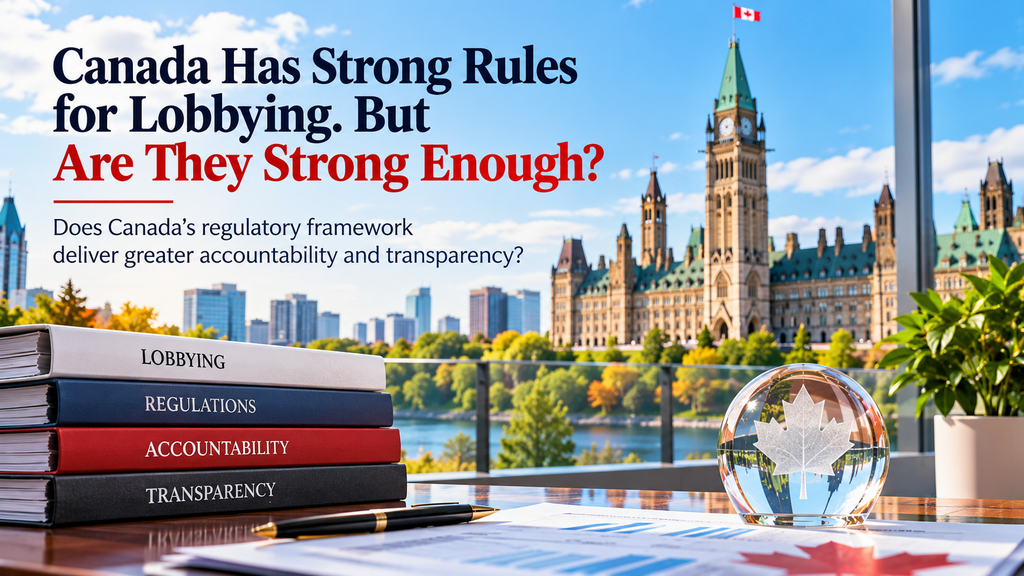
Canada Has Strong Rules for Lobbying. But Are They Strong Enough?

Does Canada’s regulatory framework deliver greater accountability and transparency?

The Marathoner, by Meegan Scott

Canada has strong rules for lobbying. But are they strong enough? Stack of books labelled lobbying, regulations, accountabilit

Canada performs strongly by international standards when it comes to regulating lobbying and promoting public integrity. The OECD’s latest assessment finds that Canada meets 80 per cent of its criteria for lobbying regulation and 89 per cent for lobbying practice, substantially above OECD averages of 43 per cent and 38 per cent respectively. Canada also performs strongly on conflict-of-interest regulation and practice.

But a strong regulatory framework does not necessarily mean strong accountability.

Canada’s system is built on a collection of laws and oversight mechanisms rather than a single regulatory regime. At the federal level, the framework includes the Lobbying Act and Lobbyists’ Code of Conduct, the Federal Accountability Act, the Conflict of Interest Act, the Canada Elections Act, and legislation governing access to public information. These are complemented by independent offices, including the Office of the Commissioner of Lobbying, the Conflict of Interest and Ethics Commissioner, the Commissioner of Canada Elections and the Public Sector Integrity Commissioner. Provinces, territories and municipalities have developed their own lobbying, ethics, conflict-of-interest and political-finance regimes.

The OECD identifies several strengths in this architecture. Canada’s lobbying regime defines lobbying activities, establishes transparency requirements and sanctions, requires registration and makes significant information publicly accessible. Its conflict-of-interest regime also establishes rules for public office holders and procedures for managing conflicts.

This architecture has clear strengths. Professor Ian Stedman of York University argues that Canada’s “broad tapestry” of specialized offices allows commissioners to develop expertise in particular areas rather than diluting their attention across multiple responsibilities. He identifies the use of independent, non-partisan commissioners and public reporting as important Canadian strengths. In his view, Canada has made significant progress in transparency because information gathered by oversight bodies is publicly accessible.

Yet Stedman also sees a fundamental weakness: coordination. Federal, provincial, territorial and municipal systems create multiple layers of rules and oversight. For citizens, organizations and businesses trying to understand who is accountable, the system can become difficult to navigate. More importantly, Stedman argues that regulatory gaps arise not necessarily because commissioners are ineffective, but because legislators have not always given them sufficient powers to enforce the rules.

Duff Conacher, co-founder of Democracy Watch, takes a considerably more critical view. He challenges the OECD’s assessment, arguing that the high scores do not adequately capture the weaknesses in Canada’s lobbying regime. His central concern is the existence of what he calls the “Dirty Dozen” loopholes, which allow lobbying to occur without disclosure. Among the concerns he identified are the treatment of unpaid lobbying and other forms of influence that can fall outside registration requirements.

Conacher’s strongest criticism, however, concerns enforcement. He told me that, based on his tally of violations since 2018, the Commissioner of Lobbying and the RCMP had effectively let 31,100 of 31,102 violations go without a finding that the lobbyist had violated the law. He also pointed to more than 2,700 late lobbying registrations and more than 1,200 registrations containing inaccurate information, which he says were also not penalized. When it comes to enforcement Duff says 99.9% of the time, violations are allowed.

The two perspectives converge on an important point: Canada has built substantial transparency infrastructure, but transparency and accountability are not the same thing.

Stedman argues that Canada needs stronger coordination among oversight bodies and greater capacity to respond to emerging forms of influence, including digital advocacy and increasingly sophisticated attempts to influence government. Conacher argues that loopholes must be closed and enforcement made genuinely independent, timely, transparent and effective.

There is also a public-trust dimension. The OECD reports that high or moderately high trust in Canada’s federal government rose from 45% in 2021 to 50% in 2025, above the OECD average of 40%. Yet greater transparency can sometimes expose more problems rather than immediately increasing confidence. As Stedman observes, the public now sees more of what goes wrong.

Canada’s regulatory framework therefore provides a strong foundation for transparency, but it has not yet fully delivered the accountability that should accompany it. The next stage of reform will require closing regulatory loopholes, strengthening enforcement powers and improving coordination across Canada’s complex system of oversight.

The question for the next decade is not whether Canada has rules. It is whether those rules are strong enough, coordinated enough and consistently enforced to ensure that those who seek to influence government—and those who make government decisions—are genuinely accountable to the public.

Share your thoughts on social media or by email at: magate.wildhorse@gmail.com.

Copyright © 2026 by Meegan Scott and Magate Wildhorse.  All rights reserved.

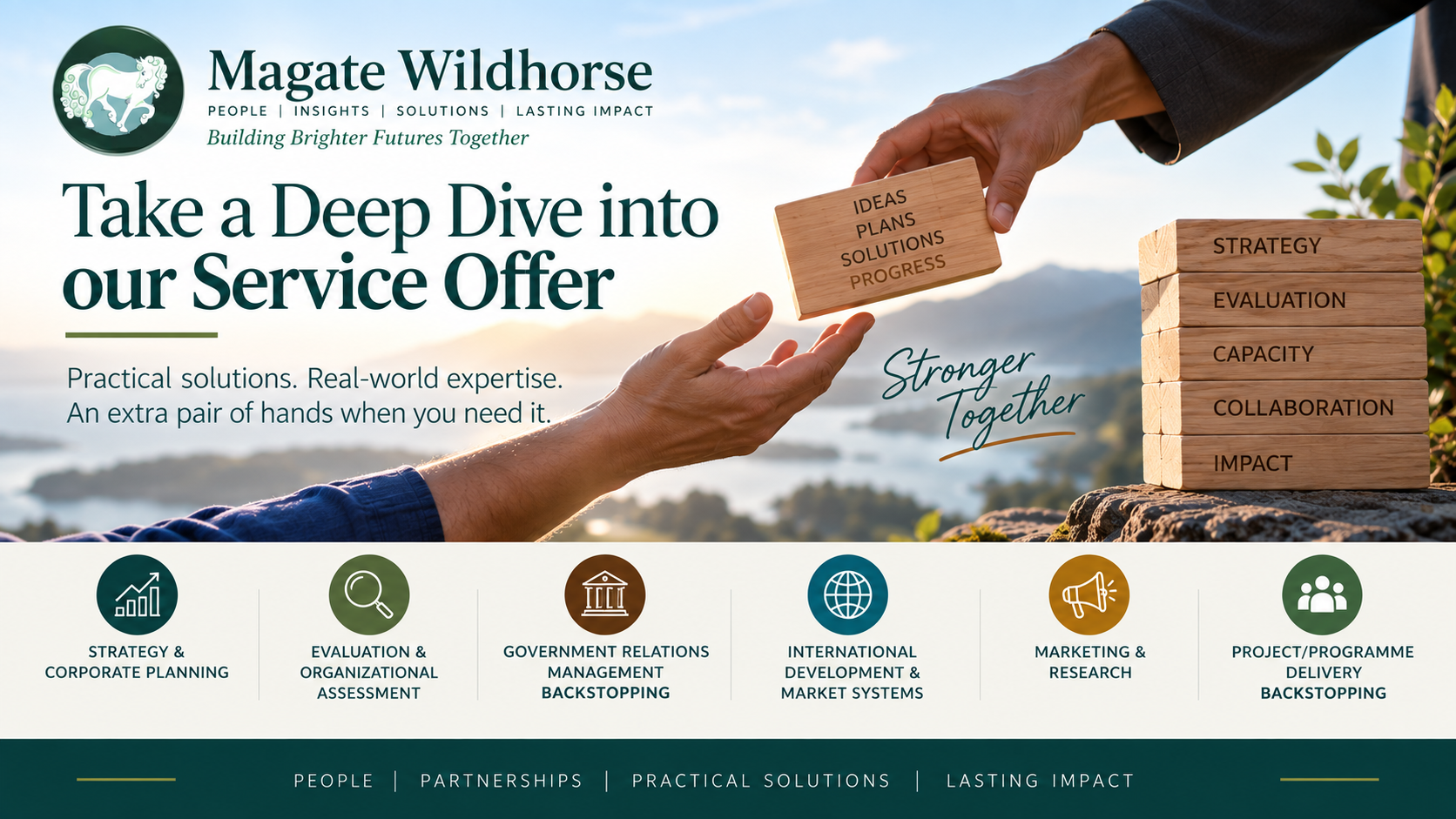
Take a Deep Dive into Magate Wildhorse’s Service Offer

Whether you need a critical friend, specialized expertise, temporary additional capacity or hands-on support to move an assignment forward, Magate Wildhorse can tailor its solutions to the needs of your organization, consulting team or project, including providing backstopping solutions.

Our service offer includes:

  • Strategy & Corporate Planning — environmental scanning, research, analysis, facilitation preparation, strategy development, plan preparation, implementation and performance monitoring.
  • Evaluation & Organizational Assessment — evaluation planning, research, data collection/analysis, organizational assessments, performance measurement, reporting and learning.
  • Government Relations Management Backstopping — research, environmental scanning, stakeholder mapping and analysis, issue monitoring, briefing materials, engagement planning and advocacy-strategy support.
  • International Development & Market Systems Backstopping — program design and management, market systems research and analysis, monitoring and evaluation, stakeholder engagement and reporting.
  • Marketing & Research — market research, strategic marketing, communications research and related analysis.
  • Project/Programme Delivery — an experienced extra pair of hands when a consultant, consulting firm or organization needs additional capacity to complete an assignment.

Available in-person, by remote or hybrid to organizations and consultants in Canada, the Caribbean, the U.S.A, Africa and internationally.

To request a solution fill our service request form below:

https://forms.gle/Gr1eaDuCb3KbX1YC6

To contact us, email: magate.wildhorse@gmail.com

Or phone: 1(647) 854-5323

All rights reserved ─ Copyright © 2026 by Magate Wildhorse ™

Understanding Growth Strategies: How Businesses Expand and Build Long-Term Value

Black woman, corporate buildings, pathways

Growth is a fundamental objective for most businesses. Whether a company is a start-up seeking to establish itself, a small business looking to scale, or an established organization pursuing new opportunities, growth provides a pathway to increased competitiveness, resilience, and long-term sustainability.

However, business growth is not only about increasing sales or expanding the size of operations. It can involve both quantitative growth—such as higher revenues, more employees, increased production capacity, and expanded investments—and qualitative growth, which focuses on improving the quality of business capabilities, processes, reputation, management practices, and customer value.

As discussed by Durmaz and İlhan in their research on business growth strategies, qualitative improvements can often lead to measurable results because stronger capabilities, better processes, and enhanced reputation frequently contribute to financial and operational growth.

Businesses pursue growth for several reasons. Growth can help companies:

  • Strengthen their position against competitors.
  • Increase their ability to withstand market challenges.
  • Improve efficiency and profitability.
  • Access new customers and markets.
  • Build greater brand recognition and business value.

Growth is therefore not simply about becoming larger—it is about becoming stronger, more competitive, and better positioned to achieve long-term goals.

Businesses generally pursue growth through two broad approaches:

  1. Organic growth
  2. Inorganic growth

Organic Growth: Building from Within

Organic growth occurs when a business expands through its own activities, capabilities, and resources. This may include increasing sales, introducing new products, entering new markets, improving operations, or strengthening the company’s reputation.

Organic growth strategies are often grouped into four categories:

1. Market Penetration

Market penetration focuses on increasing sales of existing products or services within existing markets.

Businesses may achieve this by:

  • Attracting new customers.
  • Increasing purchases from existing customers.
  • Improving marketing efforts.
  • Strengthening customer relationships.

For example, a retail company may increase its market share by improving customer loyalty programmes, enhancing its digital presence, or offering more competitive promotions.

2. Market Development

Market development involves taking existing products or services into new markets.

This may include:

  • Expanding into new geographic areas.
  • Targeting new customer segments.
  • Identifying new uses for existing products.

A company that successfully sells a product in one region may explore opportunities to introduce that same product in another country or demographic market.

3. Product Development

Product development focuses on creating new or improved products for existing customers.

Businesses use this strategy to remain competitive by:

  • Responding to changing customer needs.
  • Introducing new features.
  • Improving quality.
  • Expanding product offerings.

Companies that continuously innovate often use product development to maintain customer interest and strengthen their market position.

4. Diversification

Diversification involves developing new products and entering new markets.

Unlike the previous strategies, diversification requires businesses to develop new capabilities, technologies, or knowledge because they are moving into unfamiliar areas.

There are two common forms of diversification:

Concentric diversification involves entering related areas where the business can use existing expertise, technology, or capabilities.

Conglomerate diversification involves entering completely different industries or markets. This approach may allow businesses to spread risk by reducing dependence on one sector.

Modernization as a Growth Strategy

Growth is not always achieved by selling more products or entering new markets. Sometimes businesses grow by improving their internal capabilities.

Modernization involves upgrading outdated equipment, technology, systems, or processes to improve:

  • Productivity.
  • Product quality.
  • Efficiency.
  • Cost management.

Investing in modern technology can help businesses compete more effectively and create the foundation for future growth.

Inorganic Growth: Expanding Through Partnerships and Acquisitions

While organic growth develops from within the business, inorganic growth occurs through external opportunities such as partnerships, mergers, and acquisitions.

Businesses may choose inorganic growth to:

  • Access new markets quickly.
  • Gain technology or expertise.
  • Reduce costs through economies of scale.
  • Increase competitive strength.

Strategic Partnerships

Strategic partnerships occur when two or more businesses collaborate to achieve shared objectives while remaining independent organizations.

Partnerships can help companies combine resources, knowledge, technology, and market access.

Examples include:

  • Joint marketing initiatives.
  • Technology collaborations.
  • Distribution partnerships.
  • International market expansion agreements.

Strategic partnerships can be especially valuable for businesses that may not have sufficient resources to expand alone.

Mergers and Acquisitions

Another form of inorganic growth is through mergers and acquisitions.

A merger occurs when two companies combine to form a single organization.

An acquisition occurs when one company purchases another company, either partially or completely.

Businesses may pursue mergers and acquisitions to:

  • Enter new markets.
  • Increase market share.
  • Gain new capabilities.
  • Strengthen competitiveness.

Common forms include:

Horizontal Growth

This occurs when businesses operating in the same industry or market combine.

Benefits may include:

  • Increased market share.
  • Reduced competition.
  • Improved operational efficiency.

Vertical Growth

Vertical growth occurs when a company expands into different stages of its supply chain.

For example, a manufacturer may acquire a supplier or distribution company to gain greater control over production and delivery.

Conglomerate Growth

Conglomerate growth occurs when businesses expand into unrelated industries.

Companies may use this approach to diversify their income streams and reduce reliance on a single market.

There is no single growth strategy that works for every business. The right approach depends on factors such as:

  • The company’s financial resources.
  • Market conditions.
  • Competitive environment.
  • Customer needs.
  • Internal capabilities.
  • Long-term objectives.

A business with strong products but limited market reach may benefit from market development. A company facing intense competition may need innovation or partnerships. Another organization may require modernization before it can successfully expand.

Growth strategies should therefore be connected to a clear business vision and supported by careful analysis.

Successful growth is not simply about becoming bigger—it is about creating sustainable value.

Businesses that understand their strengths, recognize opportunities, and select appropriate growth strategies are better positioned to adapt, compete, and thrive.

Whether through organic expansion, strategic partnerships, modernization, or acquisitions, growth requires intentional decisions and disciplined execution.

Durmaz, Y., & İlhan, A. (2015). Growth Strategies in Businesses and A Theoretical Approach. International Journal of Business and Management, 10(4). https://doi.org/10.5539/ijbm.v10n4p210

Absanto, G., & Nnko, E. (2013). Analysis of Business Growth Strategies and Their Contribution to Business Growth: A Tanzania Case Study. International Journal of Economics, Commerce and Management, Vol. I, Issue 1.

This article draws on academic research by Durmaz and İlhan (2015) and Absanto and Nnko (2013) on business growth strategies, adapting their frameworks for a business audience.

Share your thoughts on social media or by email at: magate.wildhorse@gmail.com.

Written by Meegan Scott. Copyright © 2026 Meegan Scott and Magate Wildhorse Ltd. All rights reserved.

Private Sector Led Development – Caribbean Diaspora Network Governance Model

It’s Global Entrepreneurship Week 2021 and we would love to hear your thoughts on the proposed diaspora private sector led development governance model for Jamaica and the Caribbean at home and in the diaspora.

Jamaican and Caribbean diasporans are committed to playing their role in the development of their home and host countries. However, they have not been effective in leveraging available resources for developing their communities in diasporic markets or in tapping available funding for contributing to the development of their home countries.

The United States of America is one rich example of a diasporic market in which significant funding for community development remains largely untouched by the community. A look at related policy implementation reports will confirm that Caribbean countries have drawn on much of the available resources but diaspora communities have scarcely touched the monies available to them.

The situation represents a complex developmental challenge which requires interventions for diaspora development as much as there is the need for diaspora led development initiatives for home countries. It is one in which the community suffers from scarce resources in the presence of abundant resources, capacity gaps, and community data and intelligence gaps. It is also one in which the failure of diasporans to appraise themselves of government, private sector and third sector priorities and initiatives have led to more discussions than real actions for driving growth and development (in both home and host countries).

So, let us celebrate #GEW2021 like only entrepreneurs know how—working on driving development.

It is true that many diasporans have done well for themselves but even more including our small businesses struggle. Though technology has allowed the community to become more connected there is little that the community can offer its newcomers, more seasoned and foreign-born members looking for jobs or trying to grow their businesses compared to other groups.

As diaspora entrepreneurs we have a significant role to play in helping to eradicate the large pockets of  underdeveloped communities made up of Jamaican and Caribbean diasporans in developed countries. Our communities suffer poverty, crime, health, nutritional, environmental and educational challenges among others faced by our beloved home countries. In fact, we often export and import such challenges between host and home countries. It is therefore urgent that the issue of diaspora development be addressed in tandem with development of home countries. Too many diasporans live in the underdeveloped bubble of poverty in developed countries; and among them are highly educated immigrants and foreign born diasporans.

While the Jamaican and Caribbean diaspora contribute significantly to the economies of their home countries much more can be done. At times the community’s effort to do more is frustrated by lack of engagement by home country government departments. Both diasporans and governments are to be blamed for this challenge. Often diaspora businesses lack track record and local implementing partners to win government contracts and at other times “favouritism”, corruption, competition, and rules of procurement are to be blamed,

Issues related to trust, intellectual dishonesty, and the failure to practice collaboration and cooperation contribute to our struggles to develop at home and abroad.

Given, the challenge of developing both diaspora and home communities Meegan Scott and Magate Wildhorse have proposed the private sector led Jamaican and Caribbean Diaspora Network Governance Model for Environment, Climate and Economic Development.

Click the image above to enlarge image.

The core-periphery network governance mode for the community was developed in 2019, re-illustrated in 2020 and first shared with audiences in May 2020 at the Outride: COVID 19 Business Threat Seminar on Governance Model and Livelihood Protection and later at the BIDEM: Caribbean International Diaspora Entrepreneurs’ Conference and Trade Show held virtually in Toronto, 2020.

It proposes the use of a core coordinating organization that comprises diaspora and international partners (in diaspora and home countries), working groups, communities of practice, think tank, social media, academia, faith-based groups, environmental organizations, NGOs, private sector, tourism, youth, women and vulnerable groups and the ethnic media.

It involves market systems development, research, evaluation and sustainable financing.  The thematic areas of focus are in alignment with host and home country sustainable development goals and their obligations under local Agenda 2030, diaspora and home country unique ambitions and global obligations related to the UN Sustainable Development Goals.  The model includes working groups and communities of practice for:

  • Trade and Entrepreneurship
  •  Security
  • Critical Infrastructure
  •  A Centre for Excellence in Education and Training
  •  Urban Planning, Construction and Land Use
  • Youth, Women and Vulnerable Groups
  • Ocean Health and Economy
  • Agriculture, Agricultural Outsourcing and Agri-business
  • Health
  • Energy and Transport
  • Travel, Hospitality and Tourism
  • Financial Industry; and the
  • Orange Economy

The think tank has responsibility for home and diaspora related research and publication, dialogue, capacity building, advocacy and information dissemination, policy guidance and consulting on health, nutrition, climate finance, economies, labour market segments, technology, trade, inclusive and equitable education.  The proposed working groups are detailed in illustration 2 below.

Click the image above to enlarge image.

The proposed structure will allow for more diasporans to deliver development solutions for profit or revenue, grow and strengthen diaspora and home country entrepreneurs and service providers as development partners in host and home country markets. Moreover, the model recognizes that organizations are limited by the scope of their missions and capabilities, that many individuals have shared and differing visions and missions. As such all will know they have a right and a responsibility to contribute to development without negative competition and the feeling that only selected individuals and organizations can lead and deliver development solutions.

In addition, the proposed local and international partnerships will better position diaspora entities to access monies available to them to deliver solutions in partnership with Jamaican and Caribbean based non-profits, private sector, government, development and or academic partners.

This Global Entrepreneurship Week we invite you to read this piece, review the illustrations and contact us with your comments and contributions. We feel confident that a private sector led model which creates decent jobs, take care of our people and planet at home and in the diaspora is the way to go. Do you?

Share your thoughts on social media or by email at: magate.wildhorse@gmail.com.

Copyright © 2021 by Meegan Scott and Magate Wildhorse.  All rights reserved.

Readings With Meegan – En Route to Entrepreneurs’ Book Fair

Join Meegan Scott on Saturday, February 20, 2021 for select readings from books that are must-reads for entrepreneurs and business leaders. Then join in the conversation for mining wisdom from the books, their authors and your journey as an entrepreneur or business leader.

Whet your appetitie en route to the 1st Annual International Entrepreneurs’ Book Fair?

Time: 7:00 PM to 8:15 PM

Register or Inquire here: http://ow.ly/NZQa30ruEss

Readings with Meegan is a free event.

About the Fair

About Meegan Scott

Meegan Scott is strategic management consultant and founder of Magate Wildhorse Consulting, Toronto and New York as well as BIDEM Conference and Trade Show. She is also the author of the syndicated column the Marathoner.

Copyright © 2021 by Meegan Scott and Magate Wildhorse.  All rights reserved.

Be Our Guest at the Upcoming Book Fair

You are invited to join us for the Annual International Entrepreneurs’ Book Fair.

‘Tis a time to read and get ready to write for entrepreneurs!

‘Tis a time for showcasing your books and listening to book readings.

‘Tis a time to meet authors and business leaders, to network and benefit from the coming together of authors, academia and entrepreneurs.

We might even share what prompted us to create a book fair for entrepreneurs.

Guessing a local, global or regional event or observation triggered this event?

Then you are absolutely wrong.

Find out what we learnt on the frontlines and in our own practice that moved us to create this particular event.

Join us this February 2021, Thursday to Saturday for the First Annual International Entrepreneurs’ Book Fair.

Join us from whereever your ar in the world.

Come for exhibits, how-to sessions, readings, networkings and the chance to win one of five coveted awards.

Ask about sponshor and or advertising opportunities!

Get on the list of invitees – click the word subscribe below.

Subscribe

Find out more on eventbrite New York or rest of USA click on the link below:

https://www.eventbrite.ca/e/annual-international-entrepreneurs-book-fair-readings-tickets-137427365951

Get more on eventbrite – Canada and the rest of the world get your ticket on evenbrite

https://www.eventbrite.ca/e/annual-international-entrepreneurs-book-fair-readings-tickets-137208615663?aff=ebdssbonlinesearch

Copyright © 2021 by Meegan Scott and Magate Wildhorse.  All rights reserved.

Exhibit at our Book Fair

Roll Call

If you author books for entrepreneurs and business leaders; is a graphic designer, book cover illustrator, writer coach, author entrepreneur, publisher, gamer, other industry player you cannot afford to miss the book fair designed to satisfied the needs of entrepreneurs and supporting authors.

Join us for the 1st Annual International Entrepreneurs’ Book Fair, February 25-27, 2021.

Showtime:

The Fair will open 10:00 AM – 4:00 PM each day!

Surprise session include a authorship for entrepreneurs session, the question is — who will deliver this session? Ah ha

Watch this space to find out who soon!

Surprise awardee and honoree stay connected to learn more.

Follow us on Facebook, Twitter, LinkedIn and Instagram ( see social follow links on this post).

Read, sell and network with authors and industry players.

Start the year right! Read, write and sell great books.

Get on our event mailing list. Click subscribe

“A time to read and write for entrepreneurs!”

See flyer for contact detailshttps://magatewildhorse.ca/five-awards-up-for-grab-at…/

Copyright © 2021 by Meegan Scott and Magate Wildhorse.  All rights reserved.

Flyer by Meegan Scott