Agricultural Process Outsourcing – Jamaica’s Offer


Thank you for sharing thoughts, knowledge and or perspectives on any of the 3 questions below.

http://www.jamaicatradeandinvest.org/sites/default/files/resources/01%20-%20Investing%20in%20Jamaica.pdf

There was a time when parishes such as St. Elizabeth and Trelawny lost the results of back breaking labour and investments in farming as the lovely food crops went to rot in the fields.

The local economy simply could not absorb the volume of quality food with that uniquely rich Jamaican taste that was produced year after year. It is no secret that soils of different countries plus climate creates unique taste and differences such as sweetness.

  1.  What are some of the best agriculture and food processing opportunities that Jamaica currently offers to foreign investors?
  2.  Are there opportunities for agricultural process outsourcing investments into Jamaica and joint use of facilities plus related IT development?
  3. Jamaica, Canada and the world what are the possibilities or opportunities?

Looking forward to hearing what Jamaica is offering to potential investors and local farmers from experts in investment promotion and agriculture. Looking forward to hearing what the farmers and agro-exporters have to offer.

Thank you for sharing your thoughts and perspectives. Everyone has something worthwhile to share it all depends on how we view what was shared. Feel free to share on only one question.

Meegan Scott

Jamaica agriculture bpolinkedin

BackStopping Solutions

Gallery

This gallery contains 4 photos.

Click the thumbnail or image to learn more about our backstopping solutions. Our backstopping solutions are available locally and internationally — face-to-face, virtually or blended. They are tailor-made for each consultant, organization, international development project, not-for-profit, business analyst, executive, government department, business … Continue reading

Business Checkup — What’s Wrong With This Picture?

throwandflowbusinesstimepie1

Is something wrong with this picture or is it just me?

What would you change about the time allocation in the chart above?

Have you been tracking how you allocate time spent in your business according to high value and low value activities?

If not its time to get back to your operations plan to see if you have been investing the required hours to each activity in order to deliver the results you desire. Match the reality of how you spend the typical day or week to your planned time allocations. Time translated means money and or life, since cash is the life blood of your business you need to ensure you have and effectively manage your time budget.

Now, if you have not yet translated your business or corporate strategy plan into an operations plan or weekly work plans then just track back down memory lane and estimate what your time allocation looks like. Next create a rough sketch of your own chart —do it on paper, in MS Excel or even MS Word.

Let that picture be your guide for improving and stepping up the discipline required to get the right things done. Don’t throw out your time checkup chart, file it with your monitoring reports.
Based on the insights gained from your chart make a plan for allocating time for ensuring the lion’s share of time goes to the most important activities for delivering strategy and profit.

Plan, there we go again — in the real world, the time plan might not go according to plan each day, but charting the time allocation to revenue and profit serves as a guide and your benchmark. Monitoring that plan will alert you to the need to adjust your time budget in order to catch up when you are falling behind. After all life happens even in business but with the right systems and mental training in place we can stay on top of things. You will find that with time your consciousness will act as a trigger to warn you about your time spend.

The easy way out.
Take a look at the same picture from another viewpoint

throwandflowbusinesstimebar2

Click to enlarge image

Think about how you spend your work days and work weeks.
Can you spot areas in which you may have run the time red light in your business activities?

Create a Things To-do List and write down your high and low value business activities. Estimate and write down how much time it takes to deliver the most important ones. Estimate how long it takes to deliver the most time-consuming activities that must be done in order to complete other activities in your business process, place an asterisk beside those activities (Those are your bottlenecks).

Now assign time values (hours or days) or percentages of time required to deliver each activity on your list.
You can create the list in your diary, calendar or even on sticky notes (Bear in mind that you could lose your stick notes). You could even type your list into Outlook or other electronic calendar and set it as a recurring event so you receive a reminder at the start, mid-point and/or end of each week.

Those reminders will help you to monitor how you are doing with time. If you fail to manage how time is spent and cost time spent in your business you are sure to end up with a grade C or less on your business report card.

At the end of the day what is wrong with the picture or your version of the picture will depend on the following: your business and revenue models; production process; the service or product you offer; access to human capital; your strengths; your priorities; milestones and business growth objectives.

Thanks for sharing what should be changed about the picture above.
Let us know if the tips shared worked for you.

Copyright © 2017 Meegan Scott
All Rights Reserved

How Caribbean Foods and Produce Exporters Sabotage Their Own Profits

One afternoon, while strolling between the aisles of Caribbean produce in a popular Toronto supermarket a man with a middle eastern accent walked up to me. He was holding a breadfruit in his hand, and he asked me if he could just WASH, peel and eat the fruit. condimentsfrom how caribbeanI answered no, and explained that he would need to cook the fruit by roasting, baking or boiling before eating it.
The man’s curiosity regarding the fruit was obvious but, he returned it to the shelf because he was not sure how to prepare it. That incident represents just one of many occasions where Caribbean food exporters lost potential income as a result of their failure to educate consumers about their products.
For many the decision to export was driven by the need to increase both sales and income to proportions far exceeding the market size and capabilities of their local economies. The assumption that familiarity, national pride, and nostalgia make the national and Caribbean-wide Diaspora an easy and lucrative target market is only true to an extent. The approach of seeking to build a market in Canada through the ethnic niche is justified given Caribbean exporters could not possibly hope to dominate the market for foods and produce. But, applying those strategies and theories strictly within “that box”, may have contributed to costly complacency and a lack of creativity when it comes to the need for supporting exports with advertising and promotion.While the Diaspora is likely the largest consumer of Caribbean exports, its members are not likely to eat the same foods every day when there is much to explore and enjoy. Despite strong feelings of patriotism and love for things Caribbean the buyer’s decision will sometimes be swayed in favour of cost savings at a given point in time. In addition, many children of Caribbean emigrants are likely to consume more foods from the environment in which they grew up.
By focusing solely on the Diaspora and underestimating the culinary curiosity of the wider population of Canada and North America exporters miss out on the chance to increase sales and reach consumers with higher buying power. And in so doing they also forgo opportunities for growing and maintaining sustainable levels of sales on an ongoing basis.If you walk along the condiment aisle in any popular supermarket you are likely to find at least one customer of Non-Caribbean origin selecting and reading the labels of different Caribbean condiments. And if you appear to be of Caribbean origin he or she may then seek your advice on how to use it to create a dish they had. At times the item is returned to shelf because the potential customer does not have enough information to convince him or her that the product will produce the desired results or a recipe of how to use it effectively.
Scenarios such as the one described above reflects the failure on the part of exporters to capitalize on the appetite for Caribbean foods aroused by exposure at
• tradeshows supported by entities such as Caribbean Export Development,
• local festivals such as CARIBANA,
• the increasing presence of Caribbean restaurants on the culinary landscape and the ever-popular workplace potluck.

By investing a marginal portion of current earnings into activities such as recipe creation or repackaging and distribution, sampling in supermarkets, sponsoring quarterly or monthly live cook and taste in restaurants of the same national brand and contests, exporters could increase exposure to their products, produce and brands and in so doing leverage brand awareness to for building their equity.instorepromofromhowcaribbean
Publications such as the Metro, a daily newspaper which is read by more than [i]3 million readers weekly presents great opportunities for engaging and converting customers. The paper is available free of cost at every subway station and on every block in any public sphere throughout Toronto, Montreal, Vancouver, Edmonton, Halifax and other cities in Canada, North America and Europe. There are also dozens of other local free publications which provides great opportunities for increasing brand recognition and influencing the attitude and purchase decision of millions of potential customers.

Although the vast majority of brands are still fairly new and unknown, Facebook, Twitter and the use of Blogs presents rich and largely unexploited opportunities for wining a share of the consumer’s mind and spend.
Apart from the traditionally well-established brands, many of the newer offerings lack distinctive marks and names which effectively distinguishes them beyond being Caribbean. This is also another missed opportunity for ensuring your product is recognizable and favoured by the customer at the critical moment of first or attempted repeat purchase in the aisle of a supermarket where he is surrounded by dozens of other similar products.
Any exporter who underestimates the role of sales promotion, the demand for nutritional and health related information as well as the opportunity to taste or benefit from a reward in influencing the purchase decision of the Canadian and north American customer will continue to sabotage his or her own efforts to grow sales, increase income, attract new customers and secure repeat purchases.
To contact Meegan Scott please click here.


Recommended Citation
Scott, M. “How Caribbean Foods and Produce Exporters Sabotage Their Own Profits”. Big Business Mind for Small Businesses. 2012, April 5. Reprinted in Magate Wildhorse by M. Scott. 2017. Web.

.

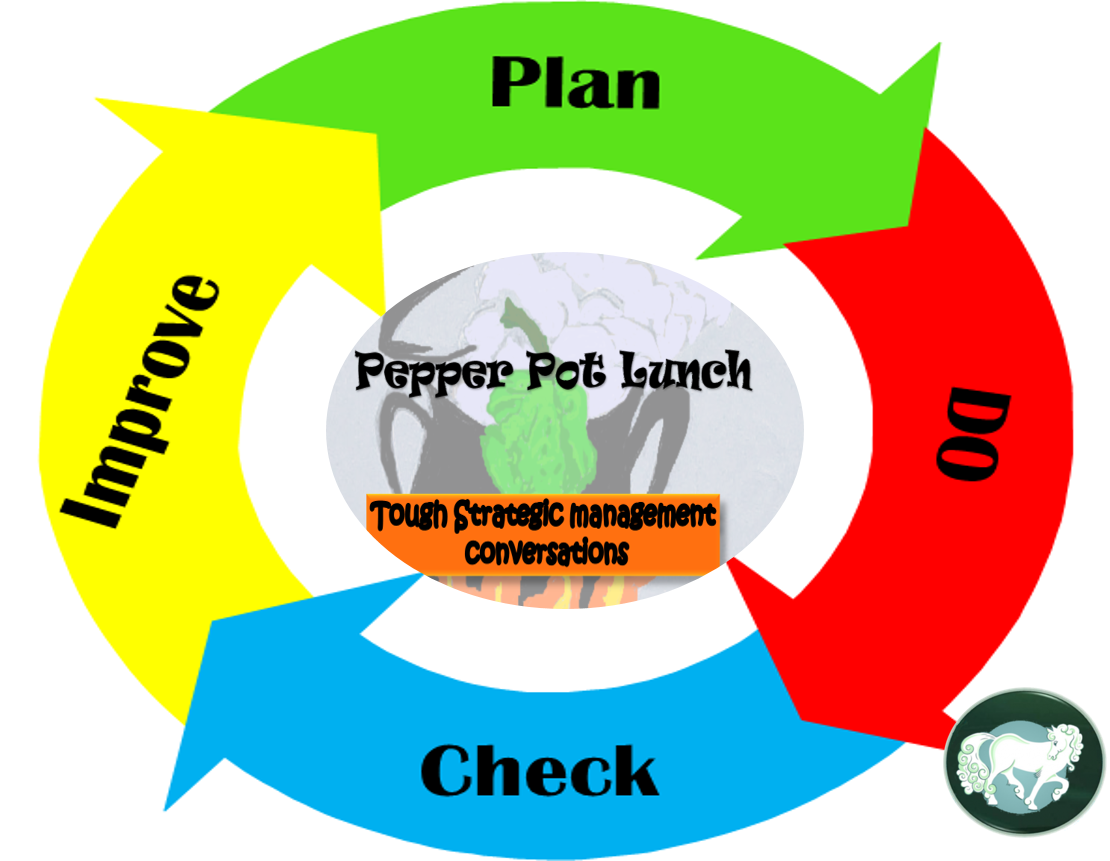
Pepper Pot Lunch ℠ — Your Culture of Performance Improvement Helper

Click the image to find out more.
Available in 60-minutes, 90-minutes, 3 hours and half-a-day sessions.

Improvement and impact on PepperPot

Environmental Scanning Solutions – PESTEL Analysis & SKEPTIC Scans +

Environmental Scanning solutionEnvironmental scanning solutions for risk intelligence and risk management needs. We will conduct environmental scans and present the findings for your strategic marketing, corporate strategy planning, policy development, project planning or organizational assessment need. We make it easy for management to see how the external environment does and could impact a market, policy, program, strategy, project or the organization in the future. Get your eyes on emerging trends, strengthen your forecasting, get a better understanding of factors, issues, variables and causal relationships. skeptic scanAsk for a PESTEL or PESTLE Analysis, SWOT, SKEPTIC Scan, PEST, STEEP, SLEPT, STEEPLE, PESTER or model of your choice. Let us help you test those assumptions and make decisions with insights from rigorous analysis.

Request your solution today!

Phone: 647-854-5323 or click here to leave us a message.


How Caribbean Food Exporters Colt Their Revenue Game

You may not believe me, but I have news for Caribbean Food and Produce exporters who believe that signing the sales contract and shipping the goods is where their revenue game ends.

My intent is to remind you of how and where you are leaving revenue on the table or in the recycle bin— of the Canadian Export Market. I invite you to try your own experiment based on my two cents of wisdom then tell me if you un-colted your revenue game.

But first let me share your export produce story with you. One afternoon, while strolling between the aisles of Caribbean produce in a popular Toronto supermarket a man with a middle eastern accent walked up to me. He was holding a breadfruit in his hand, and he asked me if he could just WASH, peel and eat the fruit. I answered no, and explained that he would need to cook the fruit by roasting, baking or boiling before eating it.

The man’s curiosity regarding the fruit was obvious but, he returned it to the shelf because he was not sure how to prepare it.  That incident represents just one of many occasions where Caribbean food exporters lost potential income as a result of their failure to educate consumers about their products.

Another time, a Chef of Caribbean origin laughed at me loudly with condescension. His joke—I had asked if they served roasted breadfruit in his Caribbean Filipino restaurant. Breadfruit was not roasted in his neck of the Caribbean.

But here is the big miss — Sales promotion, if I learnt nothing else from my days at Sobeys I learnt the magic and power of in-store demonstrations and taste testing when it comes to driving sales in the Canadian supermarket.

I could share numerous anecdotes of produce staff and cashiers who fall nervous and anxious when faced with the challenge of identifying Caribbean foods. You can hardly blame them when some items are incorrectly labeled on the shelf. Should —or will the Supermarket take on the extra cost to create awareness about these exports?

For many the decision to export was driven by the need to increase both sales and income to proportions far exceeding the market size and capabilities of their local economies.  The assumption that familiarity, national pride and nostalgia make the national and Caribbean-wide Diaspora an easy and lucrative target market is only true to an extent. The approach of seeking to build a market in Canada through the ethnic niche is justified given Caribbean exporters could not possibly hope to dominate the market for foods and produce. But, applying those strategies and theories strictly within “that box”, may have contributed to costly complacency and a lack of creativity when it comes to the need for supporting exports with advertising and promotion.

While the Diaspora is likely the largest consumer of Caribbean exports, its members are not likely to eat the same foods every day when there is much to explore and enjoy. Despite strong feelings of patriotism and love for things Caribbean the buyer’s decision will oftentimes be swayed in favour of cost savings.  In addition, many children of Caribbean emigrants are likely to consume more foods from the environment in which they grew up.

By focusing solely on the Diaspora and underestimating the culinary curiosity of the wider population of Canada and North America exporters miss out on the chance to increase sales and reach consumers with higher buying power. And in so doing they also forgo opportunities for growing and maintaining sustainable levels of sales on an ongoing basis.

sideofyampieceofvertical

Yellow yams which should have been pushed from the shelf into shopping charts long ago.

A Guyanese retailer does a great job of reducing oxidation related discolouration of yams after they are cut. Who will educate large Canadian retailers on how preserve produce? There are the consumers who read the labels in the aisle but return the goods to shelf because they don’t understand the product.

Scenarios such as those described above reflect the failure on the part of exporters to capitalize on the appetite for Caribbean foods aroused by exposure at:

  • the ever-popular workplace potluck
  • the increasing presence of Caribbean restaurants on the culinary landscape,
  • local festivals such as CARIBANA and tradeshows supported by entities such as Caribbean Export Development.
overripeavocados

Overripe avocados in store on the supermarket shelf.

Exporters should invest a small portion of their earnings in recipe creation or repackaging and distribution, sampling in supermarkets, sponsoring live cook and taste in restaurants and contests, then leverage brand awareness for building their brand equities. The photos in this article testify to the fact that the produce exports sit on the shelves too long resulting in waste and revenue lost for both exporters and retailers.

Free daily newspapers and weeklies present great opportunities for engaging and converting customers. The Metro has a daily readership of approximately [i]1.6 million, Canada-wide. Because they are available at subway stations and sidewalk kiosks most commuters and even individuals at home read one each day. Weeklies including The Caribbean Camera are available in Caribbean stores and service locations. Could you increase brand recognition, influence the attitude and purchase decision of millions of potential customers by having a presence in these publications?

Social media also presents rich and largely unexploited opportunities for wining a share of the consumer’s mind and spend.

Unlike some older traditional brands, many of the newer offerings lack distinctive marks and names which effectively distinguishes them beyond being Caribbean.  More human both in terms of images and stories are needed to powerup the brands. Let us not forget the importance of branding when it comes to ensuring your product is recognizable and favoured by the customer at the critical moment of first or attempted repeat purchase. Picture him or her in the aisle of a supermarket, surrounded by dozens of other similar products or alternatives.

What’s next is bound to happen when an exporter underestimates the role of providing nutritional and health related information as well as the opportunity to taste or benefit from a reward in influencing the purchase decision of the North American shopper. She will sabotage her own efforts to grow sales, increase income, attract new customers and secure repeat purchases.

[i] 2016, October 19. The numbers are in, and Metro’s readership continues to grow in Toronto . Metro [Online] Available at: <http://www.metronews.ca/news/toronto/2016/10/19/metro-news-readership-continues-to-grow-in-toronto.html>


Recommended Citation

Scott, M. ( 2017, June 7). How Caribbean Food Exporters Colt Their Revenue Game. Adapted from “How Caribbean Foods and Produce Exporters Sabotage Their Own Profits” by  M. Scott. 2012. Big Business Mind for Small Businesses.

Copyright © 2017 Meegan Scott
All Rights Reserved


We Slam the Door on Planning & Reporting Stress

Could you be a character in this toon of high stress– driven by the demand for planning,  research and performance reports? Checkout the toon with a solution.

nostressreportingmagateSMART.V.2.0

Carlos Zervigon—How I Got Walking with My Belly in My Hand for the PMP Designation

The Year was 2004 and the man was Carlos Zervigon, PMP Instructor.

I had been eying the PMP Course Ads in the Gleaner for a couple months with keen interest.

I already knew what to expect from the Faculty of the University of New Orleans both through face-to-face classroom interactions with—educators who knew how to facilitate learning —among them Dr. Paul Hensel, Dr. Alan Witt, Dr. J. Rabalais, Prof. Tim Ryan, Dr. Lilian Yee Fok, Dr. M. Kabir Hassan, and Dr. Steven Smith. I also knew what to expect when it came to social interaction with the Faculty through our Alumni Fundraising and Social Events.

So, what was holding me back? Did I really need to take PMP when I had been gobbling up the Project Management and Project Monitoring Methodologies taught by USAID and that of other donors especially the Inter-American Development Bank (IADB). Besides there was strategy which I wanted tied nicely to Finance and Policy, the MBA program had a major focus on Finance and we were encouraged to pursue Professional Certification soon after graduation and I was very keen on that. I had learnt through my work as a Corporate Strategy Planner that I could serve in both spheres —but which of the loves should I put my money on first?

It was a tough one given, the courses and designations had to be paid in US Dollars. The Project Management Office at the National Environment and Planning Agency was well stocked with huge binders on Project Management many of which were produced by the Inter-American Development Bank (IADB)—and I was a bookworm with a bottom less pit of an appetite for its content.

The raging hunger had started when I served a USAID Project, the online Project Management and Project Monitoring courses (World Bank or IADB) I was taking brought even greater knowledge leaving me famished. Then NEPA’s HR Department announced that individuals who pursued professional development courses within a certain time frame would get their course fees refunded if they were successful and provided proof. My problem was solved—now I could kill two birds with one stone. I registered for the PMP Course with UNO Executive Education. Carlos Zervigon had a class full and several group learning exercises to facilitate over the days of the course. He was excellent, calm, and rich with knowledge. He also had a few living life tips to share. I was learning the PMP approach and I was snatching some of his learning facilitation techniques along the way as well.

Carlos shared PMP with me in a way that was practical and ready to apply on the job. Best of all I could now mix and match from the PMP Body of Knowledge and the Project and Program Management Principles and Practices expounded by International Donors and Governments.

With the satisfying and delightful course served up by Carlos my next stop for desserts and snacks was the Humming Bird Chapter of PMP and the other areas in which I was so hungry for knowledge, competence and skills. Still I walked around with “my belly in my hand”—ravenous for the PMP Designation. Then, finally work and travel came to a slower pace in Canada and I earned the PMP Designation in 2013. But the learning is never done— both that taught formally and learning that you extract as you apply those principles and practice to problem solving. Thanks Carlos and NEPA for a great start.

Meegan Scott, B.Sc. Hons, MBA, ATM-B, CTL, PMP

Verified PMP