
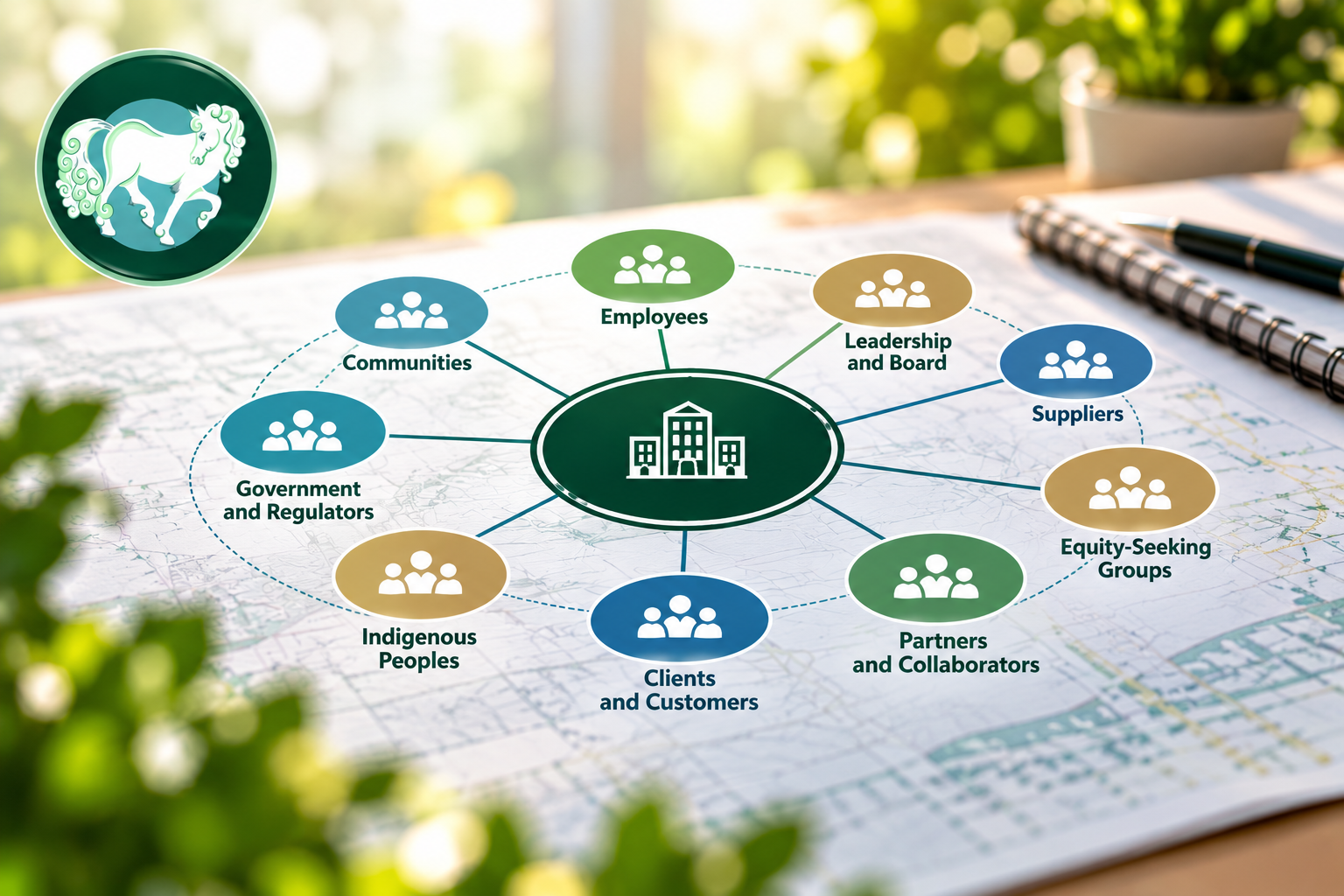
Strategic planning is not an exercise that organizations should undertake in isolation. The effectiveness of a strategic plan depends, in part, on how well an organization understands the people, groups and institutions that influence its success, contribute to its operations, or are affected by its decisions.
Stakeholder engagement, assessment and analysis are therefore important components of the strategic planning process. Although closely related, they serve distinct but complementary purposes. Stakeholder assessment helps organizations evaluate relationships, experiences and outcomes associated with the implementation of an existing strategic plan. Stakeholder analysis helps identify and understand the interests, influence and potential impact of stakeholders as an organization prepares its next plan. Stakeholder engagement provides opportunities for dialogue, consultation, collaboration and the development of shared understanding.
Stakeholder Assessment: Learning from the Existing Strategic Plan
As an organization approaches the end of its strategic planning cycle, evaluating the implementation and results of the expiring plan is essential.
Stakeholder assessment forms part of this evaluation and the broader organizational or current-state assessment. It examines who contributed to, influenced or was affected by the strategic plan and how effectively the organization responded to their needs and expectations.
Important questions include:
- Which stakeholder groups participated in implementing the plan, and what contributions did they make?
- To what extent were stakeholder needs and expectations met?
- How effective were the organization’s relationships and communication with stakeholders?
- What challenges, conflicts or unmet expectations emerged?
- What lessons should inform the next strategic planning cycle?
Stakeholder assessment can reveal gaps between organizational intentions and stakeholder experiences. It can also identify changes in stakeholder relationships, emerging concerns, and opportunities to strengthen organizational performance.
The findings should contribute to the evaluation of the expiring strategic plan and provide evidence for decisions about the organization’s future direction.
Stakeholder Analysis: Understanding Interests, Influence and Impact
Stakeholder analysis is particularly important during preplanning and the environmental scanning process. It helps organizations identify individuals, groups and institutions that can influence, contribute to or be affected by their activities and strategic decisions.
The process begins with stakeholder identification and classification. Stakeholders may be categorized as primary or secondary, internal or external, depending on their relationship with the organization.
Primary stakeholders generally have a direct relationship with, or are directly affected by, organizational activities. Secondary stakeholders may influence the organization’s operating environment or be indirectly affected by its decisions.
Once identified, stakeholders can be mapped and analyzed according to their interests, influence, potential impact, expectations and relationships.
An important objective is to understand the value stakeholders seek from their relationship with the organization. Different groups may have competing priorities, but they may also share interests that create opportunities for cooperation.
The strategic challenge is not simply to identify these interests. It is to discover connections among them and develop solutions that align stakeholder expectations with organizational purpose and strategic objectives.
Tools for Stakeholder Mapping and Analysis
Several analytical tools can support this process.
Stakeholder Interest–Influence–Impact Mapping examines the interests of stakeholder groups, their ability to influence organizational decisions, and the extent to which they may affect or be affected by organizational activities. It helps planners determine appropriate engagement strategies and identify relationships requiring particular attention.
The Power–Interest Grid classifies stakeholders according to their level of influence or power and their interest in organizational activities. It provides a practical framework for determining how different stakeholder groups should be engaged, informed or consulted.
The Stakeholder Issues Matrix identifies the issues, concerns, expectations and priorities associated with different stakeholder groups. It can highlight common interests, conflicting demands and emerging strategic issues requiring organizational attention.
The Stakeholder Salience Model, developed by Mitchell, Agle and Wood, offers another approach to stakeholder prioritization. The model examines three attributes:
- Power: The stakeholder’s ability to influence the organization or its decisions.
- Legitimacy: The perceived appropriateness or validity of the stakeholder’s claims or relationship with the organization.
- Urgency: The extent to which stakeholder claims require immediate attention.
By considering these attributes together, organizations can better understand which stakeholder claims demand attention and how stakeholder priorities may change over time.
However, stakeholder prioritization should not result in the exclusion of groups with limited power. Stakeholders who are significantly affected by organizational decisions may have important perspectives even when they lack the influence to command attention.
Stakeholder Engagement: Moving Beyond Consultation
Stakeholder engagement involves more than collecting opinions. It is a process through which organizations communicate, listen, exchange knowledge, explore competing interests and, where appropriate, collaborate on solutions.
Effective engagement helps organizations test assumptions, identify overlooked issues, build relationships and improve the quality of strategic decisions.
Engagement approaches may combine quantitative, qualitative and collaborative techniques, including:
- Surveys and questionnaires
- Individual stakeholder interviews
- Focus groups and ideation sessions
- Town halls and open forums
- Workshops and design charrettes
- Advisory committees and task forces
- Stakeholder mapping and analysis exercises
- Social network analysis
The selection of methods should reflect the purpose of the engagement, the characteristics of stakeholder groups, available resources and the decisions to be informed.
For example, surveys may capture perspectives across a large stakeholder population, while interviews and focus groups can provide deeper insights into experiences, expectations and concerns. Collaborative workshops can help stakeholders explore alternatives and identify areas of common interest.
Engagement should also be inclusive and accessible, providing meaningful opportunities for groups whose perspectives may otherwise be overlooked—such as equity seeking groups.
Integrating Stakeholder Findings into Strategic Decisions
The value of stakeholder assessment, analysis and engagement ultimately depends on how their findings are used.
Information gathered through these processes should inform the organization’s environmental scan, assessment of its current position, identification of strategic issues, and development and evaluation of strategic options.
Stakeholder findings can reveal opportunities for partnerships, changes in service needs, emerging risks, resource constraints and areas where organizational priorities require reconsideration.
They can also help identify tensions between stakeholder expectations and organizational capacity. Such tensions require strategic choices rather than promises that every interest can be accommodated.
Where interests overlap, organizations should explore solutions that create shared value. Where they conflict, transparent decision-making and clear communication become particularly important.
Stakeholder engagement should not end when the strategic plan is approved. Continued engagement during implementation, monitoring and evaluation enables organizations to assess progress, respond to changing circumstances and maintain relationships.
Conclusion
Stakeholder engagement, assessment and analysis are interconnected activities that strengthen strategic planning when applied systematically.
Assessment provides lessons from the implementation of the existing plan. Analysis develops an understanding of stakeholders and their interests, influence and potential impact. Engagement creates opportunities to gather evidence, build understanding and explore solutions.
Together, these processes help organizations move beyond internally driven planning towards strategies that are better informed, more responsive to their operating environments and more capable of generating meaningful results.
Magate Wildhorse Ltd. provides strategic planning, stakeholder engagement, assessment and analysis services to support organizations in developing evidence-informed strategies and strengthening organizational performance.
Share your thoughts on social media or by email at: magate.wildhorse@gmail.com.
Written by Meegan Scott. Copyright © 2026 Meegan Scott and Magate Wildhorse Ltd. All rights reserved.
